| OCR Text |
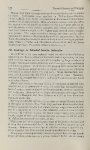
Show Women in the Labor Force 51 be kept commensurate with the median income of couples when both are engaged in substantial employment ; that the limitation on joint income should be raised; that additional deductions, of lesser amounts, should be allowed for children beyond the first; and that the age limit for child care deductions should be raised. The Revenue Act of 1964 increased the maximum deductible allow to $900 for two or more children or dependents and raised to $6,000 the income limitation that applies to married women. The ance act allows a married man to deduct the cost of child care if his wife is in an institution for at least 90 consecutive days or for a shorter period if terminated by her death. A married man whose wife is at home but unable to care for herself is eligible for the deduction, subject to the $6,000 income limitation applicable to married women. The act also raised the age of children covered by the deduction to include those under 13 years. In addition to Federal laws governing deductions for child care take such expenses, a number of States permit employed taxpayers to laws are the State of taxies. income Some from deductions State identical to the Federal law; others have variations as to who can claim the deduction, the amount of the deduction, the age limit of children for whose care the deduction can be claimed, and the income limitation of taxpayers eligible to claim the deduction. 35. Maternity Benefits Large numbers of women workers in this country, as wellas wives of men workers, are eligible to receive maternity benefits. These benefits are provided generally through voluntary health and insur ance plans or by legislative action. Voluntary health plans include those negotiated between unions and management, those offered by commercial insurance companies, those operated by associations of hospitals or physicians, and those operated cooperatively by groups. The principal types of maternity benefits available to women workers through voluntary plans are maternity leave and provisions for job security, allowances for medical care or direct medical services, "and cash payments to compensate for loss of wages. The cost of these benefits may be paid entirely by the employer, shared by the employer or-least frequently-paid entirely by the employee. and employee, In 1962 the Bureau of Labor Statistics summarized 100 selected health 'and insurance plans," all of which had maternity provisions. Collective -Bar 17 "Digest of One Hundred Selected Health and Insurance Plans Under U.S. Department gaining, Winter 1961-62." Bull. No. 1330. Bureau of 'Labor Statistics, of Labor. June 1962. |