| OCR Text |
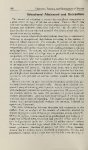
Show all Jr, 101 21, I WOMEN AS WORKERS toward Economic Equality and Opportunity Women's W omanpower is one of our country's greatest resources. skills and abilities are being used more fully and more creatively than ever before-in the home, in the community, and on the job. Since 1940 American women have been responsible for the major share in the growth of the labor force. They accounted for more than 60 percent of the total increase from 1940 to 1964, and their representation in the labor force has risen from one-fourth to more than one- third of all workers. The growing contribution made by women to the economic life of country has developed largely as a result of many social and the economic changes of the last 25 years. Women have been freed for work outside the home by scientific and technological advances that have simplified home chores. The growth of new industries in a dynamic economy and expanded activities in others, as in commerce and trade, have opened new doors for women in business, the pro fessions, and the production of goods and services. The increased demand for women as workers has been accompanied by broadened opportunities for their education and by girls' and women's increasing awareness of the need for more training. The great emphasis in recent years on completion of high school, on occupa tional training, on university education, and on continuing education for mature women has encouraged women to seek better preparation for jobs. This has facilitated their integration into the working world. Women have made significant progress in the last 4 years and have found many new doors opened to them. Many of these gains can be credited to the President's Commission on the Status of Women, es tablished in 1961 by President Kennedy.' The Commission studied the 1 See Part III for additional Inrormatton on the President's Commission of Women and developments stemming from this Commission. on the Status 3 . |