| OCR Text |
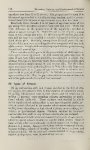
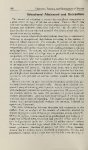
Show 256 Political and Civil Status of Women cable to the new statutory enactment powers to contract." liberalizing a married woman's Although a married woman has the power to contract with reference to her separate real property, in 27 States and the District of Columbia there are restrictions--either directly or on her right to conveyor encumber her indirectly imposed by law 22 of these States 26 and the District of separate real property. Columbia, In where both the husband and the wife have either curtesy, dower, or a statutory interest in the nature of dower in the other spouse's property, it is necessary that either spouse join in the conveyance of the real estate to the other spouse in order to bar this interest. belonging While this require ment is of benefit to the married woman in that it can help prevent the dissipation of the assets of her spouse, there are 3 States-Alabama, Florida, and Indiana-which do not give a husband a curtesy or statu tory dower interest in the wife's property and which specifically re quire a husband to join in the conveyance of his wife's real property. On the other hand, it should be pointed out that 5 States 21 provide dower or statutory interest in the nature of dower for a wife without giving her husband a similar interest in the wife's property, thereby making it necessary for the wife to join in her husband's conveyance of his realty without subjecting her real estate to similar restrictions. Recent enactments have made a number of major changes in State laws governing the power of a married woman to convey her real estate. In 1963 Texas removed its requirements that a husband join in the conveyance of his wife's property, and in January 1964 North Carolina adopted a constitutional amendment that removed its restriction in this area. During the 1965 State legislative sessions, Massachusetts amended its dower and curtesy law (effective Janu ary 1, 1966) to apply only to real estate owned at death, thereby per mitting one spouse to sell or encumber his or her real estate without the written consent of the other. Although married women in general may contract freely with third parties, transactions between husband and wife are still subject to legal limitations in many States. In some States such contracts restricted by the general rule that controls the action of cupying confidential relations with each other. contracts may be executed bya formal written are persons oc In some States such document, and in others 25 Vernon'8 Annotated TelCa8 Statute8, C.S. Art. 4614; 1963 H.B. 403; Austin et aZ. (1954),268 S.W. (2d) 793. Delaware, Hawaii, Illinois, Iowa, Kansas, Kentucky, Maine, Maryland. Minnesota, Nebraska, New Hampshire, New Jersey, North Carolina, Ohio, Oregon, Pennsylvania, Rhode Island, Tennessee, Vermont, Virginia, West Virginia, Wisconsin. (Also Missouri for all estates vested as of 1955 when the statutory dower law of 1939 was repealed.) Z1 Arkansas, Michigan, Montana, South Carolina, Utah. (In Utah joinder of wife to bar dower is necessary only if wife is resident of Utah.) v. United Oredit8 Oorp. 26 |