| OCR Text |
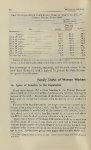
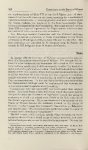
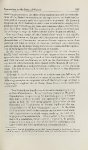
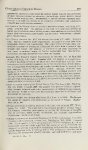
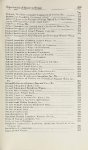
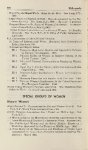
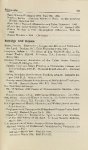
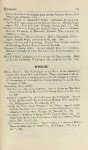
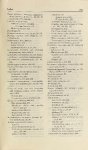
Show 254 120. Political and Civil Status of Women family Support Notwithstanding the legal emancipation of women and their in creased participation in the labor force, in all States the husband and father is primarily responsible 'for the If the of the family. furnishing such support, the support father is dead or otherwise incapable of responsibility devolves on the wife and mother. In the 8 States hav ing community-property laws of ownership between husband and wife, the common estate of husband and wife is liable for debts for family support; in the remaining States and the District of Columbia, the property of the husband generally is primarily liable for family 20 necessaries. There has been a comparatively recent trend to enact State family expense laws that impose liability for family expenses on both parents. At least 17 States 21 have enacted such laws. of these Irrespective statutes, courts in 1022 of these jurisdictions have stated that these statutes were enacted for the benefit of creditors and that the father is still primarily liable for family expenses. As a matter of fact, it appears that only 3 of the 17 States-Iowa, Tennessee, and W'ashing ton-ha ve interpreted such family expense statutes to mean that the husband's prime liability has been changed. Apparently the remain ing 4 States=-Montana, North Dakota, Rhode Island, and Wyoming have not made a judicial determination in this area. Unmarried parents.-The mother is primarily liable for support of her child born out of wedlock. Most States .have legal procedures for establishing paternity if satisfactory proo'"f1s submitted. Until paternity is established or voluntarily assumed, the father has no legal obligation to support the child, or to contribute to the expenses of the mother at childbirth. " Uniform Reciprocal Enforcement of Support A ct.-Uniform Recip rocal Enforcement of Support Acts are now in effect in all jurisdictions following the 1957 law enacted by Congress for the District of Columbia. The prime purpose of this legislation is to permit enforcement of a support decree in any jurisdiction where the party who has liability for support may be found. In addition, these laws provide that public agencies may secure a prospective and continuing support order, as well as reimbursement for public assist ance previously given. The laws have been used extensively by courts of the United States, Arizona, California, Idaho, Louisiana", Nevada, New Mexico, Texas, Washington. 21 Arizona, Arkansas, Colorado, Hltnols, Iowa, Louisiana, Massachusetts, Minnesota, Montana, North Dakota, Oregon, Rhode Island, South Dakota, Tennessee, Utah, Wash ington, Wyoming. 2 Arizona, Arkansas, Colorado, lllinois, Louisiana, Massachusetts, Minnes()ta, Oregon, South Dakota, Utah. I.!O |