| OCR Text |
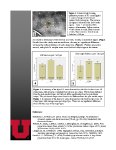
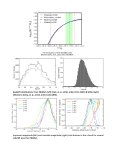
Show VALIDATING VISUAL-MANUAL DETECTION RESPONSE TASK MEASUREMENTS IN SIMULATED DISTRACTED DRIVING Mitch Whitfield (David Strayer) Department of Psychology Introduction: The advancement of technological devices (any electronic device affecting the driver) for vehicles has resulted in improved functionality and capability. However, this extreme progression has resulted in more chances for impaired driving. Because of the development of this technology, the amount of workload (mental processes when performing tasks) visually and cognitively increases. This increase results in additional dangerous situations for drivers and creates new opportunities to be involved in an accident. Researchers currently employ a variety of methods to assess levels of attention and distraction in the automobile, including the Current Detection Response Task (DRT). DRT measurements are relatively new in simultaneously measuring cognitive and visual workload and have not yet been universally adopted in Human Factors literature. The objective of this study was to validate visual-manual Detection Response Task as measurements of in-vehicle mental workload. Methods: Participants were tested in multiple conditions in which accuracy and reactions times were recorded. The conditions included a steering baseline task of following a ball, a single-choice DRT task, and a visual search task of selecting a target on a laptop screen that varied in difficulty. The visual search task varied in difficulty by either being green (easy), white (difficult) or mixed. The data was collected and integrated into a statistical computing program. Results: Reaction time was affected by whether the targets were blocked or mixed (condition), the target color was different, or whether the answer was correct or not. Incorrect responses (where the participant responded to the light more than once) were faster on average than correct responses. The difficulty also affected reaction times. In addition, there was a difficulty by steering deviation interaction. Alone, the effects of the difficulty of the visual task changed the steering deviation so that (1) at the easiest difficulty, steering was best (2) at the highest difficulty, steering was slightly worse, but (3) when participants didn’t know whether to expect easy or difficult, steering was the worst. Interestingly, the DRT was not sensitive to this phenomenon. Discussion: The results highlight the relationship of the difficulty in the visual search task and manual workload. However, the DRT did not show strong interactions with the conditions. A responding study will look at the relationship of a dual-choice DRT measurement with the visual search task. |