| OCR Text |
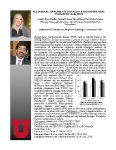
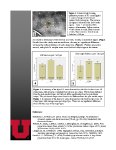
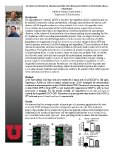
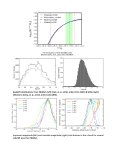
Show THE EFFECTS OF SPONTANEOUS RECURRENT SEIZURES ON DENTATE GYRUS MEDIATED LEARNING, MEMORY AND SYNAPTIC PLASTICITY Lacey Jo Woods (Peter J. West, PhD) Department of Pharmacology and Toxicology Seizures associated with epilepsy often result in cognitive comorbidities, such as memory loss, that still remain medically untreated. Mouse models have been useful in developing drugs to stop seizures in epileptic patients but not to treat the cognitive comorbidities that significantly affect the patient’s quality of life. Commonly used electrically-induced acute seizure models, such as the corneal kindled mouse model of focal seizures, have been shown to have impaired dentate gyrus (DG) mediated spatial pattern processing, learning, memory, and attenuated DG synaptic plasticity (Remigio et al., 2017). However, in the effort to develop treatments of cognitive comorbidities in epilepsy, more advanced models are needed that experience genuine spontaneous recurrent seizures (SRSs) and cognitive dysfunction. Therefore, the aim of this experiment is to evaluate the effects of SRSs on dentate gyrus-mediated cognitive function and synaptic plasticity in a novel model of temporal lobe epilepsy: the intraamygdala kainate mouse (IAK) (Almeida Silva et al., 2016; Mouri et al., 2008). After a latent period of approximately 3-5 days, a cohort of the IAK mice was shown to experience approximately 1-2 spontaneous seizures per day (n=10). When tested in a task reliant on spatial pattern processing in the dentate gyrus (the metric task), these IAK mice were shown to have significant learning and memory impairments compared to the SHAM surgical and control mice. Finally, in a measure of experience-dependent synaptic plasticity commonly accepted as a model of learning and memory at the level of the synapse (LongTerm Potentiation, LTP), LTP at the perforant path – dentate granule cell synapse in the IAK group was significantly attenuated relative to both the control and SHAM surgical mice. These results strongly suggest that SRSs significantly impact cognitive function both in vivo and in vitro at the level of the dentate gyrus. Therefore, IAK mice may be useful as a tool to evaluate novel treatments for cognitive dysfunction associated with SRSs in patients with epilepsy. |