| OCR Text |
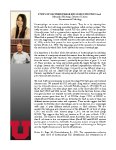
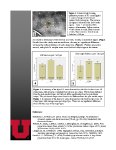
Show RECONSTRUCTING THE DEVILS CASTLE ROCK AVALANCHE, ALBION BASIN, UTAH Patricia Pedersen (Jeffrey Moore) Department of Geology and Geophysics The Devils Castle rock avalanche is a bouldery, tonged-shaped, ~7m thick deposit found in the Albion Basin near Alta, Utah. The site (Figure 1) was subject to numerous glaciations during the Late Pleistocene, which undercut the cirque headwall, conditioning the slope for failure. Through carbon-14 dating, the landslide is estimated to have occurred >~9,000 years ago (Madsen & Currey, 1979). Site reconnaissance shows a minor glacial advance following the slide, which would put a likely estimate of occurrence during the Younger Dryas. This date will be further refined through cosmogenic surface exposure dating of the deposit (Laabs, et al., 2011). Figure 1: Devils Castle Rock avalanches are low-frequency, high-magnitude slope failures characterized by high mobility and fluid like runout motion (Davies & McSaveney, 2012) which shape landscapes worldwide. The Devils Castle rock avalanche consists of debris from the headwall which is made of the Gardison/Deseret Limestone (Baker, Calkins, Crittenden, & Bromfield, 1966), with boulders ranging up to 8 Figure 2: Boundary of slide with meters high. The deposit is found largely headwall marked. in wooded areas and has a distinct, hummocky surface morphology. The slide has a runout of approximately 1.5 km and is of particular interest due to its unusual narrowness and distinct curve at the toe of the deposit (Figure 2). From field reconnaissance, we noted that the current topography expresses a gully that may have existed, which helped direct the runout, confining it and possibly |