| OCR Text |
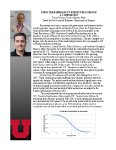
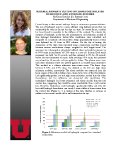
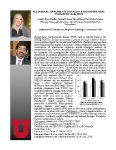
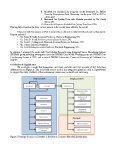
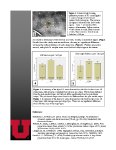
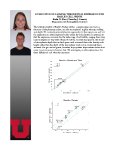
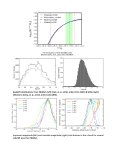
Show EMPIRICAL CHARACTERIZATION OF GROUND EFFECTS FOR QUADCOPTER DRONES Matthew W. Givens (Kam K. Leang) Department of Mechanical Engineering When any kind of aircraft comes into proximity with the ground, it experiences an increase in thrust without the addition of any extra power. This increased efficiency, known widely as “ground effects”, has been studied extensively for both fixed-wing and rotary-wing aircraft for decades. Now, with the advent of micro-sized quadcopter platforms, it has become necessary to study this phenomenon further and extend its scope to include effects from both walls and ceilings. Though somewhat similar in principle, quadcopters differ from helicopters in a variety of ways. Being much smaller, viscous forces of the air play a much larger role in their aerodynamic flow fields. Additionally, quadcopters incorporate four thrust-producing rotors instead of one, again altering the characteristics of the flow. The spacing and configuration of the rotors also play important roles. Unlike helicopters, the propellers of a quadcopter are fixed in shape and angle of attack, resulting in very different control dynamics. Understanding the interactions between the quadcopter and the ground and other features could help to improve landing algorithms, augment the capabilities of both autonomous and piloted indoor flight, inform batterysaving flight paths, and even provide a means of generating a map of the ground without any additional onboard sensors. Preliminary tests confirmed that older, helicopter-centric models of ground effects were not accurate when applied to quadcopter configurations. The helicopter model proposed by Cheeseman & Bennett in 1957 is shown in comparison with data collected in this research. More rigorous testing is necessary before publication, so a new test stand is currently being constructed in the DARC Lab. |