| OCR Text |
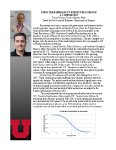
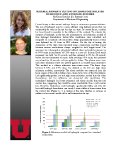
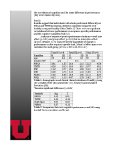
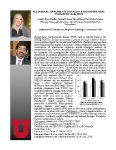
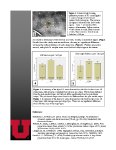
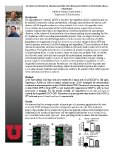
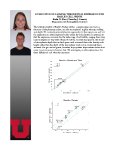
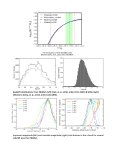
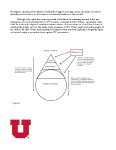
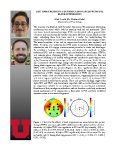
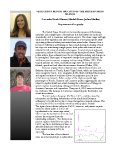
Show LOW-FREQUENCY VARIATIONS OF EXTREME STRATOSPHERIC CIRCULATION EVENTS Sean Heslin (Thomas Reichler) Department of Atmospheric Sciences Unusual decadal patterns in the distribution of sudden stratospheric warming (SSW) events during the 1990s and 2000s led to discussion on possible long term variability of SSW occurrences. SSWs occur once every other year on average and are often associated with the break up of the polar vortex and surface cold air outbreaks. With only 60 years of observational data, a more robust dataset is necessary to test possible long term variability. Twenty-nine global climate models were studied, including an 8000-yearlong model run. The number of consecutive years with SSWs as well as the wait time between events were studied. Wavelet analysis was also performed on the observational data as well as global climate model output. A monte-carlo approach was used to test randomness of modeled SSW occurrences. The reanalysis data from 1950 to 2012 showed significance for wait times and consecutive events. For the global climate model, wait time between events as well as the number of consecutive events which occurred were not significantly different than those generated by the monte-carlo simulations. My conclusion is that periods like the 1990-2000s are not uncommon over a long period of time, however the fact that they occurred in our short observational record is interesting, but ultimately due to random chance. Figure 1 Red lines show the analyzed probability of wait time/consecutive years. Shading denotes the 95 percentile and the dark grey line denotes the 50 percentile. Significance can be seen in the reanalysis data, but all values of the model fall within the significance thresholds. |