| OCR Text |
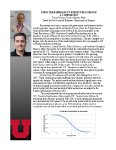
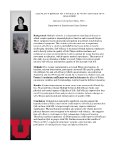
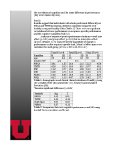
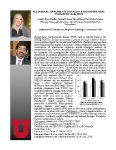
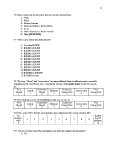
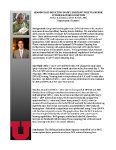
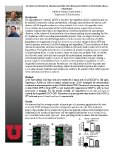
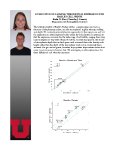
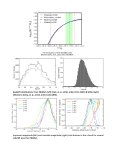
Show HEARING LOSS INDUCTION IN NRF2 KNOCKOUT MICE VIA MURINE CYTOMEGALOVIRUS INFECTION Taelor S. Johnson (Albert H. Park, MD) Department of Surgery Background: Congenital cytomegalovirus (CMV) infection is the number one cause of non-hereditary hearing loss in children. We and others have used a mouse model to evaluate the mechanisms of CMV-induced hearing loss. These studies revealed that mouse strains with deficiencies in natural killer (NK) cell responses are more susceptible to CMV-induced hearing loss, while strains with competent NK responses are resistant. These resistant strains showed minimal CMV-induced hearing loss. Furthermore, treating with antioxidants protected CMV infected mice from hearing loss in susceptible strains. We hypothesized that resistant mouse strains that lack the key transcriptional regulator of the biological antioxidant response (Nrf2 knockout mice) will have increased susceptibility to CMV-induced hearing loss. Our Study: Nrf2-/- mice were infected with 200 (plaque-forming units (pfu) of murine CMV via intra-cranial injection to on post-natal day 3. The effect of CMV infection on hearing was assessed using auditory brainstem response (ABR) testing and distortion product otoacoustic emissions (DPOAE) testing. Hearing tests were performed at 4, 6, and 8 weeks after injection. Un-infected Nrf2-/- mice served as controls and were evaluated by ABR and DPOAE at the same time points. Results: Uninfected Nrf2-/- mice showed comparable DPOAE and ABR thresholds to wild-type uninfected resistant mice (data not shown) indicating that Nrf2-/- mice do not have an inherent hearing deficiency. Nrf2-/- CMV infected mice showed elevated thresholds compared to uninfected Nrf2-/- mice at all three time points (P<0.001) over the measured tone frequencies for both DPOAE and ABR thresholds indicating that Nrf2 mice showed an increased in susceptibility to CMV-induced hearing loss. Statistical comparisons were performed using 2-way ANOVA with Bonferroni post-hoc tests. The graphs show that the Nrf2 knockout mice have higher thresholds, which is consistent with a decrease in hearing capabilities. Both groups, control and infected, showed an increase in threshold with increased time, meaning that with increased time, hearing tests show decreased abilities. Conclusion: The biological antioxidant response controlled by the Nrf2 transcription factor protects mice from CMV-induced hearing loss. |