| OCR Text |
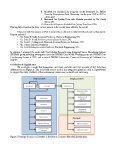
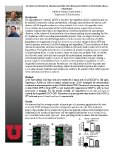
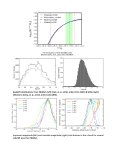
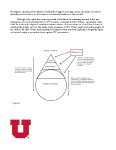
Show DESIGNING POLYMER COATED CARBON NANOTUBE DETECTORS FOR ALKANE VAPORS Adam Ansari and Saleha Rajabali (Ling Zang) Department of Materials Science and Engineering Alkane vapors are difficult to be detected in oil pipelines until a leak exceeds 1% of the total flow. Yet, an alkane leak can cause severe security, environmental, and human health problems if it is not identified or addressed. Detecting low concentrations of alkanes will lead to the detection of small leaks in oil pipelines. However, this requires a sensor, which can detect a substance that is inert at room temperature. Polymer coated carbon nanotubes provide that sensor. Polymers, when coating a network of carbon nanotubes, can serve as a tunnel barrier between adjacent carbon nanotubes. In a sensor, adsorption causes this barrier to swell increasing the resistance of the network. This enables the detection of charge transferred inactive species such as alkanes. In this research, design rules were applied to the polymer to make it a suitable host for alkanes by varying the functional end groups of the polymer to enable detection of specific alkanes. A polymer/CNT sensor was successfully designed using a very simple drop casting method that allows for alkane vapors to adhere to the polymer/CNT causing a change in conductivity. UV-Vis testing shows that the CNTs used for sensing indeed contained polymer coatings. The sensor exhibited detection of saturated vapors of dodecane, hexane, hydrazine, ethyl acetate, methanol, ethanol, and acetone, all diluted with dry air to 1% of the saturated vapor. The sensor did not show a false positive in the presence of water vapor. Polymers 4020 and 4027 were more successful at sensing hexane due to its shorter polymer chains and further development needs to be done to effectively detect longer polymer chains such as dodecane. Reference: [1] C. Wang, B. R. Bunes, M. Xu, N. Wu, X. Yang, D. E. Gross, and L. Zang, “Interfacial Donor–Acceptor Nanofibril Composites for Selective Alkane Vapor Detection,” ACS Sensors, vol. 1, no. 5, pp. 552–559, May 2016. [2] Y. Zhang, M. Xu, B. R. Bunes, N. Wu, D. E. Gross, J. S. Moore, and L. Zang, “Oligomer-Coated Carbon Nanotube Chemiresistive Sensors for Selective Detection of Nitroaromatic Explosives,” ACS Applied Materials & Interfaces, vol. 7, no. 14, pp. 7471–7475, Mar. 2015. |