| OCR Text |
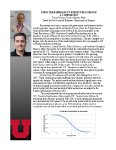
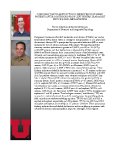
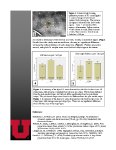
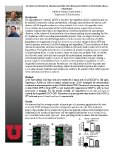
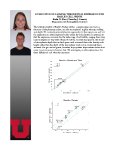
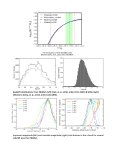
Show POSSIBLE BENEFITS OF ECTOMYCORRHIZAL INFECTION OF CONIFER SEEDLINGSAT ALTA SKI AREA Anna Albertsen1, Dr. Jennifer Follstad Shah1,2, Dr. Jennifer H. Watt1,2, Pheobe McNeally2,3, Maura Olivos4 1 Environmental and Sustainability Studies Program, University of Utah, Department of Geography, University of Utah, 3DIGIT Lab, University of Utah, 4Alta Environmental Center 2 The University of Utah Environmental and Sustainability Studies (ENVST) Program and DIGIT Lab have partnered with Alta Environmental Center since 2013 to implement a student service project. In this project, students enrolled in Field Experience: Environmental and Sustainability Studies (ENVST 2000) help to maintain tree cover on steep slopes at Alta Ski Resort by collecting and sowing seeds from local conifers in the Alta plant nursery and later planting the seedlings in areas designated for reforestation. In summer 2016, we analyzed the survival and growth of conifer seedlings planted between 2013-2015. We found that, on average, 11% of conifer seedlings survived since planting and grew between 1-2.5 centimeters per year. Many species of ectomycorrhizal (ECM) exist, which have evolved to form a generally positive symbiosis with the roots of conifer trees (Brundrett et al. 1996). The small filaments, or hyphae, of the ECM envelope the root cap cell and then enter the epidermal layer. At this point, the hyphae fill in the area between the epidermal cells and are able to grow into a mature mantle whose external membrane creates a symbiotic interface with the cell wall, which allows for increased access to water and nutrients from fungi to conifer. The hyphae often extend far from the roots of conifers, increasing the area of soil from which water and nutrients may be acquired. In return, the ECM obtains simple sugars produced by the conifer via photosynthesis. My interest in mycology prompted us to extend the research done for the ENVST 2000 service project. We asked whether measurable benefits can be found for conifer seedlings with abundant ECM root infection. We harvested 22 conifer seedlings from a small area at Alta Ski Area, with similar aspect, slope, and light availability, to explore whether measures of plant growth or soil conditions are associated with ECM root infection, which was quantified using the point-intersect method. ECM root infection ranged from 0-75%. Other variables ranged as follows: height 10.2-43.2 cm, needle biomass 0.9-4.8 grams, soil moisture 0.3-0.8%, and soil organic matter 5.1-18.2%. Our analysis showed no significant relationships between percent ECM root infection and plant height, diameter, or needle biomass. We also found no relationship between percent root infection and soil moisture or soil organic matter content. Factors such as variability in measurements and small sample size can obscure ecological pattern. A greenhouse experiment is planned to overcome some of the technical and statistical limitations of the current field study. These experiments will better control environmental variation and increase sample size. If this experiment finds a positive and significant relationship between ECM root infection and the |