| OCR Text |
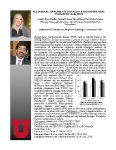
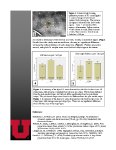
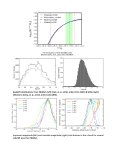
Show THE ROLE OF DRP1 PROTEIN ON PLATELET HALF-LIFE SPAN AND PLATELET’S COUNT Emilia Tugolukova (Dr. Jesse Rowley) Department of Internal Medicine, University of Utah School of Medicine Platelets are cellular components of the blood that play an important role in platelet plug formation and blood clotting. An increased number of platelets correlates with abnormal blood clotting, leading to fatal diseases such as stroke or heart attack. Decreased platelet count correlates with increased bleeding. Mitochondria are important for proper platelet function (Zharikov and Shiva, 2013), and are involved in regulating platelet number. The constant fission and fusion of mitochondria performed by the Dynamin-Related Protein 1 (Drp1) and Mitofusin 2 (Mfn2) are required for normal cellular function (Van der Bliek, Shen & Kawajiri, 2013). In many cell types, mitochondrial fission is regulated by Drp1, which attaches to mitochondrial scission sites and separates mitochondrial membranes (Smirnova, Griparic, Shurland, & Bliek, 2001). The role of Drp1 in regulating platelet count is not known. It is also unknown whether Drp1 regulates mitochondrial fission in platelets or their parent cells, the megakaryocytes. I used Drp1platelet-specific knock out (KO) mice to determine whether Drp1 is functional in megakaryocytes and platelets. Through immunofluorescent microscopy, the morphology of mitochondria in Drp1-KO and WT mice in both platelets and megakaryocytes was assessed. In accordance with previous studies in other cells (Qian et al, 2012), mitochondria in both platelets and megakaryocytes were elongated and hyper fused in KO as compared to WT. This suggests Drp1 regulates fission in megakaryocytes and in platelets. As Drp1 deficiency is a known modulator of mitochondrial function and cellular survival (Wei Qian et all, 2012), I hypothesized that Drp1 deficient platelets will have a longer circulatory life-span. I further predicted a reduced rate of platelet formation would accompany the longer circulatory life-span to maintain platelet counts. Using platelet-specific Drp1 KO mice, I observed a decreased platelet halflife (P<0.05), a decreased platelet count (P=0.004) and an increased mean platelet volume (MPV, P=0.002). In other studies, MPV corresponds with a younger platelet population, suggesting that platelets are younger in KO mice as compared to WT counterparts. In contrast, there was no difference between WT and KO in the rate of platelet production in vitro and in vivo. In summary, Drp1 KO mice’s megakaryocytes and platelets display altered mitochondrial morphology, suggesting a potential impact of the mitochondrial network on platelet life-span, and platelet counts that can be experimentally validated by future studies. Contrary to my hypothesis, Drp1 KO platelets have a significantly shorter circulatory life-span, a potentially younger platelet population, and a lowered platelet numbers. Additional in vitro experiments are underway to determine whether overexpression of Drp1 or a dominant negative Drp1 will reciprocally alter the mitochondrial morphology and function in human megakaryocytes and eventually assess the effect on human platelet count. |