| OCR Text |
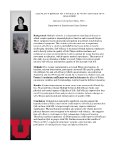
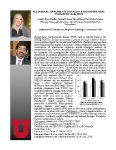
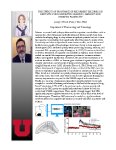
Show QUANTIFICATION OF MOVEMENT ANALYSIS AND FUNCTIONAL TESTING IN DANCERS Whitney Russell, BS, BA (Charlie Hicks-Little, PhD, ATC) Department of Physical Therapy and Athletic Training According to the International Association for Dance Medicine and Science2, to date screenings have not been scientifically proven to be able to predict dance injuries. Although there are many reasons why injuries may arise in dancers, from improper technique to variance in anatomy to overworking the body, it is essential that standards are established in order to push the dance medicine movement forward. In order to establish standardized functional testing for dancers, there must be attention paid to developing a baseline protocol. Adopting the modification of Functional Movement Screening (FMS)1, the newly developed Dance Technical Movement Screening (DTMS), will enable sports medicine practitioners and dance instructors more efficiency in training and greatly decrease the prevalence of both acute and chronic dance-related injuries. The purpose of this study was to design a protocol specific to dancers that can indicate areas of imbalance or weakness. Phase one of the study was to establish a protocol that was widely applicable to dancers. Phase two is set to commence including subject testing of DTMS protocol and construction of an apparatus capable of combing all parameters of DTMS. Data were collected from various sources and have been examined in order to modify the FMS so that it may serve dancers as a community. DTMS scores will be labeled similar to the FMS including 3, 2, and 1 in order of decreasing proficiency1. Differential divergence in scoring will come into play when applied to dancers as technique will vary depending on the demand of movement. In order to remain consistent and applicable to a variety of dance techniques, the DTMS was developed from basic ballet movements and poses that construct the fundamentals present in most dance vocabulary aside from vernacular styles. The DTMS includes eight areas of testing including Plie/Grande Plie, Degage to Tombe en Croix, Tendu en Croix, Grande Battement en Croix, Arabesque, Shoulder Mobility, Cambre en Croix, and Jumping sequences including Échappe, Changement, Soubresaut, Entrechat Quatre, Entrechat Royale. Creating a connection between dancers and sports medicine practitioners is the only way to begin effective prevention of injury in the arts. In addition, strengthening the quality of care given to dancers would help educate them on preventative measures they can take to extend their career longevity and encourage the field of dance medicine to evolve. REFERENCES 1. Cook, Gray et al. “Functional Movement Screening: The Use of Fundamental Movements as an Assessment of Function ‐ Part 1.” International Journal of Sports Physical Therapy 9.3 (2014): 396–409. Print. 2. Wilmerding, Virginia, and Donna Krasnow. "Resource Paper: Engaging in Rigorous Quantitative Research." International Association for Dance Medicine and Science, n.d. Web. 2 Nov. 2016 |