| OCR Text |
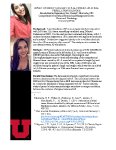
Show DISCLOSING A DOWN SYNDROME DIAGNOSIS: THE WHO, WHEN, AND HOW OF IT Kyle McDougle (Lauren Clark RN, PhD, FAAN) Department of Nursing Background The goal of this research was to describe diagnostic disclosure among parents of newborn children with Down syndrome. This included who disclosed to the parent(s), to whom the parents disclosed the information, in what timeframe, and the medium of disclosure. Methods Using qualitative descriptive methods we analyzed data from interviews with 33 parents of children (1-3 y.o.) with Down syndrome in 2015-16. Investigators systematically coded interview transcripts and used constant comparison to construct patterns of parental disclosure. These inductive results were compared with published disclosure accounts in the literature. Results Parents were told of their child’s Down syndrome diagnosis by the obstetrician prenatally, by the pediatrician/nurse/genetic counselor postnatally, or subsequently by the other parent (in cases where they were not told at the same time). Thereafter, parents disclosed to their own parents most often and most immediately, followed by disclosing to their brothers, sisters, children (if there were others), and finally friends. Social media was used by approximately 20% of parents to disclose widely, often with pictures. Significance Although giving parents unexpected diagnostic news has been studied previously, no studies were found that detailed to whom, when, or how parents tell others of their child’s diagnosis. Studying disclosure may help clarify if it is experienced as either (or both) a source of distress or a positive pivotal moment that solidifies support among confidants. In designing future supportive interventions for parents of children with Down syndrome, anticipating their concerns and guiding them in the disclosure process may be helpful. |