| OCR Text |
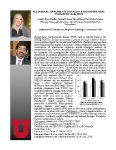
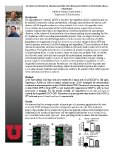
Show ENDOTHELIAL CELL SPECIFIC DELETION OF AUTOPHAGYRELATED GENE 3 DOES NOT DISRUPT ARTERIAL STRUCTURE Tyler James Bean, Matthew Harmon, Jose Brambila, (J David Symons) College of Health One limb of research in the sponsor’s laboratory is concerned with vascular aging. In particular, we are determining whether autophagy contributes to vascular dysfunction that is associated with aging. Autophagy (i.e., self-eating) is an evolutionarily conserved, dynamic process whereby subcellular membranes are rearranged so that targeted cytosolic components can be engulfed, delivered to the lysosome, and the sequestered cargo can be degraded and recycled. This quality control process functions during basal conditions and is upregulated during cellular stress to adapt to changing nutritional and energy demands. It is known that the process of autophagy is suppressed by aging, but most research has focused on brain, liver, cardiac, and skeletal muscle, and relatively little is known concerning the role of vascular autophagy in general, and endothelial cell (EC) autophagy in particular. Earlier the sponsor’s laboratory demonstrated that genetic silencing of autophagy-related gene 3 (Atg3) in ECs dysregulated EC function. Thus, intact EC autophagy is requisite to maintain normal EC function. To assess the translational relevance of this finding (i.e., from ECs to the intact mouse), the laboratory generated mice with tamoxifen-inducible deletion of Atg3 specifically in ECs (i.e., iecAtg3KO mice). The purpose of this project was to determine whether vascular structure is impaired in iecAtg3KO mice vs. wild type (WT) littermate control mice. Tamoxifen (100¼l x 10 mg / ml) was administered IP to iecAtg3KO and WT mice on 10 consecutive days. At 12 months of age the aorta, heart, liver, and both kidneys were excised from anesthetized mice and placed in 4% formalin. Next, tissues were dehydrated, embedded in paraffin, sectioned (3¼m thick), mounted on glass slides, and stained appropriately. To assess perivascular fibrosis in heart, liver, and kidney, tissue sections were stained with Masson’s Trichrome to assess collagen. Approximately 30 fields of view were observed at X10 magnification for each slide, using the cellSens Dimension Program with an OLYMPUS IX71 microscope. No differences existed concerning perivascular fibrosis in the heart (21.7 ± 1.7% vs. 18.7 ± 1.4%), liver (3.6 ± 0.4% vs. 2.6 ± 0.2%), and kidney (7.7 ± 0.8% vs. 5.3 ± 0.7%), in iecAtg3KO (n=3) vs. WT (n=3) mice, respectively. Segments of aorta were stained with (i) hematoxylin and eosin (H&E), to estimate smooth muscle cell nuclei per unit area, (ii) Verhoeff’s Van Gieson (EVG), to quantify lamellae surface density and number of lamellae, and (iii) Masson’s Trichrome to assess media thickness and endothelial nuclei per unit area. Approximately nine fields of view were observed for each slide. Media thickness (24.1 ± 8.4 vs. 28.9 ± 6.3 ¼m), number of lamellae/vessel (2.47 ± 0.66 and 2.18 ± 0.46), endothelial nuclei/area (2.59x10⁻¹⁰ ± 7.40x10⁻¹¹ and 2.71x10¹⁰ ± 5.95x10⁻¹¹ N/mm2), lamellae surface density (0.034 ± 0.010 ¼m-2 and 0.045 ± 0.017¼m-2), and smooth muscle cell nuclei/area (8.63x10⁻¹⁰ ± 3.24x10¹⁰ and 1.06x10⁻⁹ ± 2.69x10⁻¹⁰ N/mm2), were similar between iecAtg3KO and WT mice, respectively. We conclude that arterial structure is not altered by endothelial cell specific deletion of Atg3. |