| OCR Text |
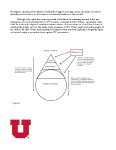
Show two (the half note) is different from the symbol for three (the dotted half note.) Now let’s take a look at the same melody in White Mensural Notation as shown in Figure 6. Figure 6 In this system, the shape for two (as it does for the first note on the word “round”) could also mean three (as it does for the word “weasel”), depending on the note that precedes or follows it. White mensural notation also doesn’t have any bars separating measures, unlike modern notation. Therefore, you depend more on the text and the music itself to determine where to start and end a phrase, giving the music less rigidity. There was a study done by Pam Mueller and Daniel Oppenheimer on laptop versus longhand note-taking that was published in 2014. They concluded that laptops made verbatim note taking easier than longhand and therefore the notes from laptop users tended to be verbatim. This worked great for factual recall and both groups of notetakers scored equally strong when tested (Mueller and Oppenheimer, 2014). However, when it came to conceptual retention, the laptop note takers scored significantly less than the longhand note takers (Mueller and Oppenheimer, 2014). Mueller and Oppenheimer’s study attributed this to the tools they were using: since writing something out by hand forces you to interact with it more intimately and summarize long streams of information into your own words, the longhand notetakers were able to grasp concepts better than those that were able to write everything verbatim. This is an example of how the tools we use may influence how we accomplish a task. By merely having more propensity for a certain characteristic, the tool “suggests” a methodology to us that we can then take. Notation is a tool in music and one that can likewise suggest methodologies to composers. It’s a way of encoding information and similar to a language, if you aren’t familiar with all the capabilities of your tool you are limited in what you can communicate. Van Stappen’s piece was written in a highly imitative and pattern-based tradition that was common during the Renaissance. There are two components within white mensural notation that help to support this style. 1) The distinctive noteheads make pattern recognition easier to recgnize and therefore easier to place into other voices. 2) Lack of barlines keeps patterns intact facilitating pattern repetition not only visually, but also spatially because you don’t have barlines breaking your patterns (Schubert, 1999). Therefore, working in this musical style with the original notation system is an advantage that presents all these compositional capabilities without having to pull or force them out of modern notation. Below are some examples taken from van Stappen’s piece that show how white mensural notation facilitates pattern recognition which in turn informs and enriches the voice recreation process. Figure 7 |