| OCR Text |
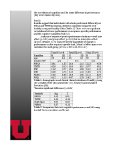
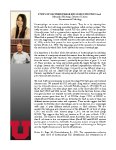
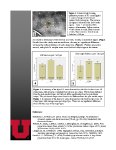
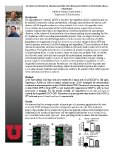
Show INSIGHTS INTO MAJOR BASIC PROTEIN FUNCTION FROM EVOLUTIONARY ANALYSIS Elliot Lee (Matthew Barber, Nels Elde) Department of Human Genetics The Red Queen Hypothesis states that hosts must constantly evolve to survive in the face of rapidly evolving pathogens. This cycle of hosts adapting against pathogens and pathogens adapting against host adaptations is referred to as an evolutionary arms race. It is possible to find evidence of these conflicts in the combatants’ DNA, and nowhere is it more evident than in immune-related genes. Major Basic Protein (MBP) is the most abundant protein in the eosinophil granule. Eosinophils are granulated white blood cells with important functions in tissue homeostasis and innate immunity. Based on the cytotoxic contents of their granules, scientists have suggested that one of the eosinophil’s most important functions is defending against multicellular parasites which are too large to simply phagocytize. MBP stands out among the other toxic proteins in the eosinophil granule because of its exceptionally high isoelectric point (pI = 11.4) and range of toxicity. This small (13.8kDa) protein is highly toxic to various helminths, bacteria, and mammalian tissues. While MBP’s mechanism of toxicity is unknown, the protein’s strong charge likely plays a role. Structural analysis of MBP has shown that it has carbohydrate binding domains similar to the C-type lectins. This observation, in addition to its high charge, has led researchers to hypothesize that MBP kills cells by binding to surface sugars and disrupting their plasma membrane. To gain a better understanding of MBP’s mechanism of toxicity, we retrieved sequence data for the gene which encodes MBP from 19 different primate species using the NCBI gene database and cloning from cDNA. We then passed this sequence data through the Phylogenetic Analysis by Maximum Likelihood software package’s codeml analysis, which compares the rate of nonsynonymous to synonymous mutations in a gene. This analysis can determine if a gene is under positive selection, indicating that it is part of an evolutionary arms race. Additionally, the analysis can also determine which specific amino acid residues are under positive selection. Our codeml analysis of MBP returned a p-value less than 0.0001. This value is far less than the generally accepted threshold of 0.1, meaning that MBP is almost certainly under positive selection. The analysis further identified 9 amino acid residues which show strong signs of positive selection (figure 1). In the 3D conformation of the protein, many of these sites (colored pink) are near MBP’s carbohydrate binding domain (heparin sulfate shown in yellow). These results indicate that MBP’s ability to bind different carbohydrates has driven its evolution. It is unclear whether the host or its pathogens have exerted stronger selective pressure on MBP, since host tissues also suffer serious damage when MBP binds to their cells. Nonetheless, this data implies that MBP’s carbohydrate binding domain is important to its function as a toxic protein, lending weight to the hypothesis that MBP kills cells by using its strong charge to disrupt their plasma membranes. This data can also serve as an excellent starting point for future functional studies, since it reveals amino acids which likely have a large impact on MBP’s toxicity when changed. |