| OCR Text |
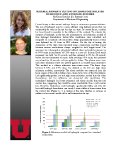
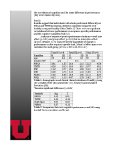
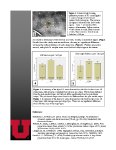
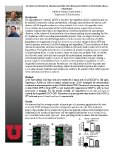
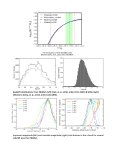
Show Figure 1 Fluorescent microscopy was used to detect Edc3-GFP (A) or Dcp2-GFP (B) in cells treated with rapamycin or CCCP for 3 hours prior to imaging. The average number of puncta per cell were counted in cells expressing EDC3-GFP (C) and DCP2-GFP (D). Error bars represent SEM. ****p<.00005. A EDC3-GFP C B WT GFP DIC ** **** 4 GFP GFP DIC DIC WT oar1∆ lsm1∆ lsm1∆oar1∆ 2 oar1∆ oar1∆ lsm1∆ average # of puncta per cell 6 pat1∆ pat1∆oar1∆ 0 WT oar1∆ lsm1∆oar1∆ edc3∆ edc3∆oar1∆ Glucose Glycerol Figure 2 FASII is required for electron transport chain (ETC) assembly, therefore by creating oar1∆ mutants, the ETC doesn’t assemble and we are able to induce mitochondrial stress through genetic engineering. Fluorescent microscopy was used to detect Edc3-GFP (A) in oar1∆ and lsm1∆oar1∆ mutants and WT cells. The average number of puncta per cell were counted in cells expressing EDC3-GFP (B). Error bars represent SEM. ****p<.00005 **p<.005. C. Growth of the indicated mutant strains was assayed on glucose and on glycerol. Conclusion We set out to discover the fate of mRNA when mitochondrial stress is induced. The results of fluorescent microscopy show that both our pharmacological and genetic model of mitochondrial stress induction were successful in showing an increase in the formation and accumulation of p-bodies. This increase in formation of p-bodies leads us to believe that mRNA degradation also increases upon the onset of mitochondrial stress. Therefore, we feel confident in moving forward and performing an RNA-seq assay. With this assay, we will be able to detect if there is a significant decrease in the amount of mRNA present in the cell when mitochondrial stress is induced. Specifically, the amount of mRNA that encodes a subset of mitochondrial proteins. We hope that our discoveries will further our knowledge and understanding of cellular function and how mitochondrial stress can cause a myriad of responses in the cell. References Decker, C. J., and R. Parker. “P-Bodies and Stress Granules: Possible Roles in the Control of Translation and MRNA Degradation.” Cold Spring Harbor Perspectives in Biology, vol. 4, no. 9, Mar. 2012, doi:10.1101/cshperspect.a012286. |