| OCR Text |
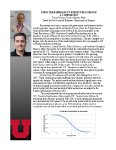
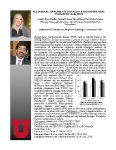
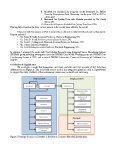
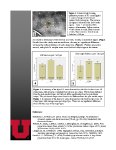
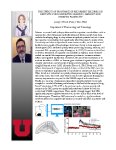
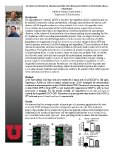
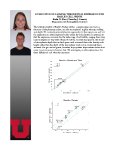
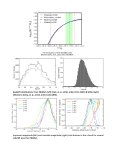
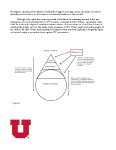
Show First, participants completed a measure of trait optimism (the LOT-R). Then participants were randomly given two of four scenarios (to prevent fatigue) in which a protagonist was applying for an award, investing in a new business, undergoing surgery, or hosting a party. After that, they were asked how much optimism they would prescribe for the protagonist across three decision phases: baseline, deliberative, and implemental (see Appendix for a description of the phases). Then they completed a Cultural Orientation measure. The results support the optimism-performance hypothesis (see Figure 1). At each decision phase (baseline, deliberative, and implemental), the participants on average prescribed optimism for the protagonist in the scenario. Participants likely believed that if the protagonist had an optimistic mindset, it would improve the protagonist’s chance of success. The pattern of results with participants in China differs somewhat from the results reported in previous research, with participants in the U.S. (see Figure 2). In the U.S., participants prescribed optimism only in the baseline and implemental phases, when it was especially clear that the protagonist needed motivation. But in the deliberative phase, when the protagonist was deciding which decision to make, participants in the U.S. prescribed accuracy, not optimism. This means the Chinese participants were even more likely to prescribe optimism across situations than the American participants. Both Americans and Chinese prescribed the most optimism during the implemental phase of the decision process. In conclusion, the results from our experiment in China support the optimism-performance hypothesis, indicating that people across cultures believe that optimism leads to success. We plan to conduct follow-up experiments to test the robustness and replicability of the current results. We also plan to extend the current results by putting optimism to the test: will being optimistic affect performance as much as people in China expect? One limitation of the current research is that, although the survey was written in Chinese, we used the same names that were used in the U.S. survey, and so there is a chance that our Chinese participants were giving answers based on what they believed would be helpful for American protagonists. In our next experiment, we will use Chinese names. |