| OCR Text |
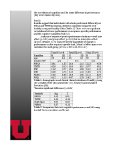
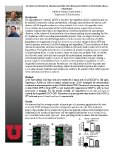
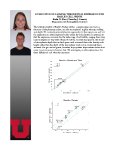
Show THE NITROGEN CONTENT AND ISOTOPIC COMPOSITION OF URBAN AND RIPARIAN SOILS Grant Doxey (Dr. Diane Pataki) Department of Biology Natural ecosystems are increasingly converted into urban areas. This conversion has many impacts on the nitrogen (N) cycle, including increased N inputs in the form of fertilizer. In this study, we compared N content and isotopic composition of soils from cultivated urban lawns on the University of Utah campus, with soils of a nearby riparian forest. The goal of this study was to better understand how urbanization affects the N cycle. We compared %N of riparian and lawn soils using a Wilcoxon signed-rank test. C:N ratios and isotopic composition (δ15N) were compared using a Student’s t-test. We hypothesized that the lawn soils would have higher %N than the riparian soils as a result of increased N inputs via fertilizer. However, riparian soils had slightly higher %N than lawn soils (W=170, p = 0.049). This could be due to rapid N assimilation of fertilizer by lawns. Interestingly, the riparian soils had a higher C:N ratio (t = 9.522, p = 0.001), indicating that riparian soils are more N limited than the lawn soils. As we expected, riparian soils were more enriched in δ15 N than the lawn soils (t = 3.107, p = 0.004). This enrichment is a potential indicator of increased microbial activity and other fractionation processes in riparian soils. These results suggest that N cycling in lawn soils is distinguished from natural riparian soils. This distinction is the result of lawn fertilization. |