| OCR Text |
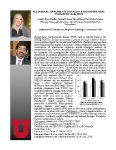
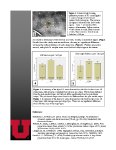
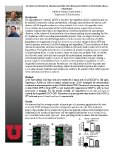
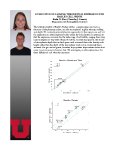
Show PLATELET-ACTIVATING FACTOR FAILS TO INDUCE OXIDIZED LOW DENSITY LIPOPROTEIN 1 EXPRESSION IN PMNS ISOLATED FROM NEWBORN INFANTS Sheridan Joseph (Christian Con Yost M.D.) University of Utah School of Medicine Department of Pediatrics Background: Polymorphonuclear leukocytes (PMN) respond to infection and tissue damage as specialized cells within the innate immune response. PMNs express the receptor for platelet activating factor (PAF), a pro-inflammatory phospholipid, and respond with de novo gene expression. Next-generation RNA sequencing (RNA-seq) revealed differences in mRNA expression of oxidizing low-density lipoprotein 1 (OLR1) following PAF-stimulation of PMNs isolated from preterm infants, healthy term infants, and healthy adults. OLR1 is expressed by PMNs and its inhibition correlates with improved survival in sepsis. A comparison of OLR1 expression following PAF stimulation in PMNs isolated from neonates and adults has not been made. Objective: We hypothesized that OLR1 expression is altered in PAF-stimulated newborn infant PMNs compared to PMNs isolated from healthy adults. Design/Methods: We isolated PMNs from adult peripheral blood, term infant umbilical cord blood, and prematurely born infant (< 30 weeks gestation) umbilical cord blood using positive immunoselection for CD15. We stimulated the cells with PAF (10 nM) for 2-4 hours and analyzed the OLR1 mRNA and protein expression using real time RT-PCR, Immunocytochemistry (ICC), and ELISA analysis. Results: PMNs isolated from newborn infants, whether term or preterm at birth, demonstrated decreased induction of OLR1 mRNA expression following PAF stimulation as compared to PMNs isolated from healthy adults. Adult PMNs that were stimulated with PAF (10 nM) resulted in a 103.5 fold increase in mRNA over 2 hours. However, term and preterm PMNs stimulated with PAF (10 nM) resulted in a 6.3 and 13.4 fold increase in mRNA respectfully. Western blot analysis detected OLR1 protein at T0 baseline levels for term and adult PMNs. However, when stimulated for 8hrs with PAF (10 nM), only the adult PMNs showed an increase in protein expression. These results were confirmed by ICC and ELISA. Conclusion(s): Following stimulation with PAF, PMNs isolated from healthy adults show a robust increase in OLR1 mRNA and protein expression while newborn infant PMNs do not. We conclude that the failure to respond to stimulation is a result of a developmental element of neonatal neutrophil dysfunction. This could contribute to the inflammatory tissue damage found in the pro-inflammatory phenotype of newborn infants. |