| OCR Text |
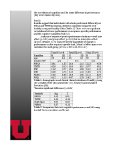
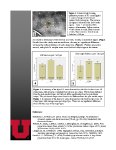
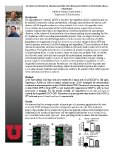
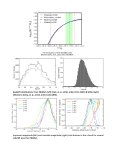
Show DEPLOYMENT, RELATIONSHIP PROBLEMS AND COMBAT EXPERIENCE AND HOW IT RELATES TO DEPRESSION AND POSTTRAUMATIC STRESS SYMPTOMS Anne Gry Wheaton (Dr. Craig Bryan, Dr. James Stephenson, AnnaBelle O. Bryan, Dr. Chad Morrow) Department of Psychology The purpose of the current study is to examine how self-reported relationship problems and combat experience is associated with later emotional distress in a sample of pararescuemen. We hypothesized that the interaction of relationship problems with combat experience would be associated with increased severity PTSS and depression symptoms. Methods: 198 male U.S. Air Force (USAF) pararescuemen completed self-report measures of life stressors (Life Events Questionnaire), PTSD symptom severity (PTSD Checklist, Military Version), depression symptom severity (Patient Health Questionnaire-9), and combat exposure (Deployment Risk and Resiliency Inventory) at two time points. Multilevel regression models were used to examine the association of relationship problems with depression severity over time. Results: Multilevel regression was used to determine if relationship problems were associated with depression and posttraumatic stress symptoms. Results indicated that the interaction of negative relationship experiences with time was statistically nonsignificant for both depression (F (1, 279) = 0.521, p = .471) and posttraumatic stress (F (2, 267) = 0.046, p = .955) suggesting that the association of negative relationship experiences with these outcomes did not differ from each other over time. Interaction terms were then removed from each model. Results indicated that the main effect of relationship problems on posttraumatic stress symptoms was not statistically significant over time (F (1, 83) = .518, p = .474). In contrast, negative relationship experiences were significantly associated with depression severity over time (F (1, 280) = 13.282, p < .001). Post-hoc analyses indicated that participants who endorsed a negative relationship experience reported significantly more severe depression than participants denying any negative relationship experience at both baseline (M = 3.38, SD = 4.45, vs. M = 2.02, SD = 3.38; d = -0.44 [-0.76, -0.11]) and follow-up (M = 3.86, SD = 2.91, vs. M = 1.78, SD = 2.16, d = -0.90 [-1.48, -0.29]). We then conducted an exploratory analysis to determine if the association of combat exposure with depression was moderated by negative relationship experiences. This was tested by adding the interaction of negative relationship experiences and combat exposure to the regression model. The interaction term was statistically significant (F (1, 169) = 9.665, p = .002) confirming that the relationship of combat exposure with depression differed between participants who reported negative relationship experiences and those who did not. Conclusions: Results found participants indicating no relationship problems experienced no significant change in depression related to increased combat exposure, while those with relationship problems experienced an increase in depression but not PTSD. |