| OCR Text |
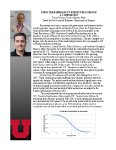
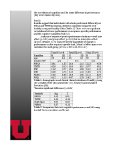
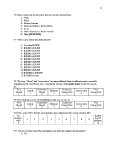
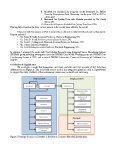
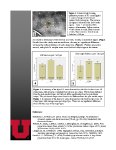
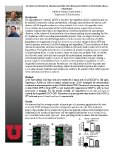
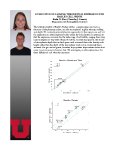
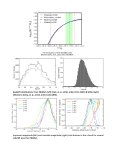
Show the correlation of cognition and the mean difference in performance (day seven minus day one). Results Results suggest that individuals with stroke performed differently on MOCA and TMTB indicating a deficit in cognition compared with healthy young and healthy elder (Table 1). There were no significant correlations between performance on sequence specific performance and the cognitive variables (Table 2). Analysis of sequence specific performance finds an overall time effect (p<0.01) and group effect (p<0.01) but no interaction effect (p=0.11) (Figure 1). To characterize the magnitude of change in performance on the sequence specific task, Cohen’s d effect sizes were calculated for each group (ST=0.11, HE=1.58, HY=1.37). Total HY n=8 Total HE n=8 Total ST n=8 Variables M SD M SD M SD Age 23 3.4 63 10 59 12 Gender M/F 4/4 5/3 5/3 MOCA 28.1 1.55 26.6 2.13 22.2* 4.50 TMTB 42.0 10.0 50.9 15.9 107* 49.1 DSF 11.0 2.77 10.6 1.84 8.12 4.12 DSB 6.00 2.72 6.13 1.24 5.00 2.72 Matrix 16.6 5.63 15.8 4.82 11.2 5.67 PSQI 4.12 1.13 4.87 2.25 5.62 2.77 Table 1. Demographics and clinical characterizations of healthy young (HY), healthy elder (HE) and stroke (ST). Mean (M) and Standard Deviation (SD). *Denotes significant difference (p<0.05) Variable Sig T MOCA 0.10 0.01 TMTB 0.28 -‐0.20 Digit Span 0.07 0.10 Matrix 0.37 -‐0.10 Table 2. Comparison between cognitive performance and SSP using Kendall Tau’s correlation coefficient. |