| OCR Text |
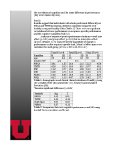
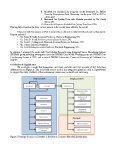
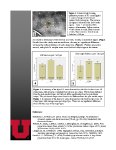
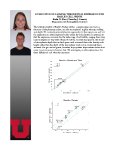
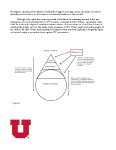
Show there was much less enthusiasm with taking a class on the topic; only 24% of respondents were highly likely to do so. Perceived acceptability of AI behaviors at sporting events was relatively low. To address our hypothesis, we compared the mean perceived acceptability of our respondents toward the Utes, Catawba Indians, and Seminoles nickname and logo. All respondents answered questions about the acceptability of the Utes nickname and logo, while the other two schools were randomly assigned. No statistically significant differences in attitudes were found between those who participated in such behaviors and those that had only observed them, due to the fact that there were not enough respondents who had participated in such behaviors in the study. The results also demonstrate that respondents perceived the Utes nickname to be more acceptable (M=4.06, SD=1.89) than the Seminoles nickname (M=3.63, SD=1.50) to a degree of statistical significant (p=.011). Identify with the Utes nickname & logo 15% 32 See harm in changing the Utes nickname & logo 29 See value in learning about the Northern Utes Nation 30 39 30 Would take a class about the Northern Utes Nation See acceptability in American Indian behaviors at sporting events 51 24 19 Low 33 35 33 Medium 36 High 40 46 Figure 1. Percentage of respondents that… (N = 104) Discussion: Our research shows that the general attitudes students, faculty, and staff on campus have toward the Utes nickname and logo are mixed. While respondents identify strongly with the symbols – potentially due to their direct affiliation with the school – they do not feel as passionately about changing the logo. This would indicate that potentially the feelings of identification with the logo are linked to something other than the AI aspects of the imagery. Respondents also perceived value in learning about the Northern Utes Nation, but few were willing to take a class on the topic. This could indicate that the commitment of taking a class is too strong, or that the desire to learn about the Northern Utes Nation is a result of the fleeting attachment to the school. Our variables specific to RQ3 showed that individuals felt AI behaviors at sporting events were not acceptable; however, our pool of responses was not big enough to dig into specific or prove statistical significance of this claim. As we originally hypothesized, the results did demonstrate that students, faculty, and staff perceive our use of the Utes symbols to be more respectful than other schools, specifically Florida State, even though both schools have AI elements to their symbols. This serves to strengthen our claim that school affiliation is a strong factor in how much individuals perceive the acceptability of AI imagery and names. |