| OCR Text |
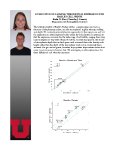
Show Appendix Example Decision Phases from One Scenario Baseline Jane’s true chance of success is 65%. What should she think is her true chance of success? (Move the slider below to indicate what she should think her chance is given that her true chance is 65%.) Deliberative Jane’s true chance of success is 65%. If she is going to have to make a lot of important decisions based on her chance of success (e.g., how to plan her other finances), what should she think is her true chance of success? (Move the slider below to indicate what she should think her chance is given that her true chance is 65%.) Implemental Jane’s true chance of success if she works hard is 65%. If she is going to need motivation to work hard, what should she think is her true chance of success if she works hard? (Move the slider below to indicate what she should think her chance if she works hard is given that her true chance is 65%.) References Lee, Y., & Duenas, G. (1995.). Stereotype accuracy in multicultural business. Stereotype Accuracy: Toward Appreciating Group Differences., 157-186. doi:10.1037/10495-007 Lee, Y.T., & Seligman, M. E. (1997). Are Americans more Optimistic than the Chinese? Personality and Social Psychology Bulletin, 23(1), 32-40. doi:10.1177/0146167297231004 Tenney, E. R., Logg, J. M., & Moore, D. A. (2015). (Too) optimistic about optimism: The belief that optimism improves performance. Journal of Personality and Social Psychology, 108(3), 377-399. doi:10.1037/pspa0000018. Triandis, H. C. (1995). Individualism & collectivism. Westview press. |