| OCR Text |
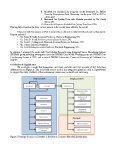
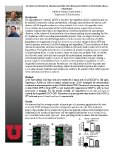
Show piece in score format. Now, this might be problematic because I can get stuck in a vertical frame of mind in a musical style that wasn’t conceived of in this way, but research by Jessie Ann Owens shows that some sketches of van Stappen’s contemporaries exist in what is called quasi-score format. In quasiscore format the parts appear on the same page like score format, but don’t exactly line up with each other or have barlines running through all the voices. While the whole sketch of a piece may not always show up in quasi-score format, evidence shows that composers may have sketched at least sections of a piece in quasi score format and then pieced them together in the final product (Owens, 1997). This in turn suggests that it was an option that may have been available to van Stappen, and therefore serves as a plausible method in my reconstruction. Based on this information, I then segmented the piece into homophonic and polyphonic sections. The homophonic sections are the easiest to guess and are good indications of arrival points. This then could allow me to work backwards from known points and guide where the polyphonic sections would end. I then studied the following four voice pieces by van Stappen: Ave Maria, Beati Paci (A setting of Des tous biens plaine), Non lotis Manibus, Virtutum expulsus, and Gentil Galans. Though Exaudi nos is a five-voice work, the tenor line only comes in at certain points, rendering it effectively a four-voice piece for the majority of the time. By studying these scores, I can find cadential and textural tendencies. Ave Maria, the piece most similar to Exaudi nos in its alternation of homophonic and polyphonic sections, has a wealth of information about how van Stappen spaced four voices and the doublings he used in homophonic sections. I color coded the triads van Stappen used in the homophonic opening to Ave Maria, with green being the lowest note of the triad, pink the middle second note, and yellow the highest third note. From this I discovered he most often doubles the lowest note of the triad, which appears the most in the bass voice. The next note most doubled is yellow, or the third highest note in the triad. From this information, the homophonic sections can become a bit of a crossword puzzle where you fill in the missing voice, as shown in Figure 4. Figure 4 We see that by studying his surviving scores and the music theory of the time, we have better chance of filling in the homophonic sections correctly. However, the contrapuntal sections prove more challenging. There are more rhythmic possibilities and motivic structures that appear. This begs the question does intent study of music theory provide enough information to recreate the voice in these more diverse polyphonic sections? As a composer, wouldn’t I want to have all the options that were available to van Stappen when trying to recreate this voice? This is where notation could be used to expand our understanding of the piece. 2. Compromises in the Evolution of Notation Notation as we know it today hasn’t always been this way. Some of the earliest musical markings were added above written text as memory aides for melodies to be performed in liturgical |