| OCR Text |
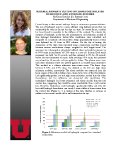
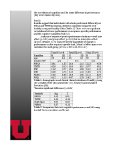
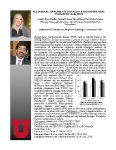
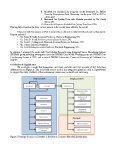
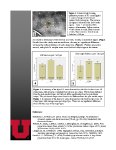
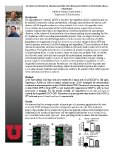
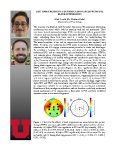
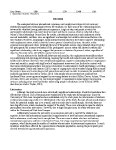
Show ADP Dose Response in Mouse Dorsal Root Ganglia Neurons Kevin J. Voll (Alan Light) Department of Anesthesiology, University of Utah School of Medicine Background The fidelity of our calcium imaging data is of upmost importance. Calcium imaging provides an opportunity to document the responses of neurons to various metabolites in real time. Among these metabolites is Adenosine Triphosphate (ATP), the universal energy molecule. ATP has additionally been observed as a ligand for purine sensing receptors on sensory neurons; a process termed purinergic signaling. ATP is known to spontaneously hydrolyze to its dephosphorylated form Adenosine Diphosphate (ADP), also a known ligand for purinergic receptors. Our lab has shown ATP to have a half-life of ~20 minutes at room temperature. This led to the suspicion that ADP is rapidly generated while preparing ATP for calcium imaging experiments. Our objective is to investigate whether ADP’s presence could be unsuspectingly measured as an ATP response. Methods Eight day old mice were injected with a fluorescent label, DiI, in the gastrocnemius muscle. DiI is retrogradely transported to neurons bodies in dorsal root ganglion (DRG). After 1-2 weeks, lumbar DRGs (L1-L6) were dissected from the mice and cultured for neurons on 24-well polystyrene plates. 12-24 hours later, the cultured neurons were loaded with Fura-2 dye (calcium binding) and were subjected to calcium imaging techniques. The neurons were exposed to ADP and two control metabolites: capsaicin and KCl. ADP was tested at concentrations ranging from 0 µM to 10,000 µM. The results were analyzed and recorded as either response or no response. The percentage responded per concentration was graphed and compared to previous ATP experiments performed at the equal concentrations. Results ADP showed responses during calcium imaging experiments at concentrations of 100 µM and higher (Figure 1). Concentrations <100 µM yield little to no response. ADP at all concentrations showed lower responses than its conjugate ATP. However, ADP present at 100 µM and higher concentrations was enough to prompt a difficult to distinguish response from ATP. Figure 1: A quantitative comparison of percent neurons activated by ATP (Black) and ADP (Red) at equal concentrations. The associated grey lines represent the percent response of DiI labeled cells which designate sensory neurons from the gastrocnemius. Conclusion We set out with the objective of investigating ADP’s effect on calcium imaging experiments. Our evidence supports the suspicion that ADP concentrations do influence calcium imaging measurements. The earlier data that ATP rapidly hydrolyzes to ADP with a half-life of ~20 minutes, combined with our current data, suggest the accuracy of calcium imaging experiments using ATP is time dependent. We strongly urge all scientist using ATP as a metabolite in calcium imaging to do so expeditiously to maintain the fidelity of their ATP experiments. |