| OCR Text |
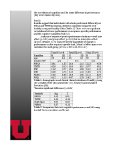
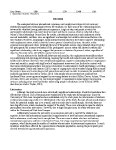
Show Emp. Stress -.056 a. Dependent Variable: Sociability .023 -.278 -2.458 .016 Discussion The analayses between international experience and employment stress did not show any statistically significant relationships between the variables; the directions of the relationship shown between the variables (having international experience, length of stay, and period in which the participant lived abroad) were most likely incorrect and due to chances, which is reflected in the p values of the relationships. Hence from the results, international experience and employment stress seemed unrelatable, and there were no significant relationships that could be determined between the two variables. However, surprisingly, household instead was shown to have direct negative relationship with employment stress, which meant the lower a person’s household income, the more he/she experienced employment stress. Although the level of household income was evaluated subjectively by the participants, the personal evaluation of the participants’ income status still showed a statistically significant relationship, which may suggest that personal evaluation of a person’s status, regardless of objective financial status, still affects a person’s stress level. Then in relation to the health-risk behaviors and sociality, the employment stress did not show any relationship with smoking and drinking, meaning that health-risk behavior also was not relevant to health-risk behaviors. But there was a statistically significant negative relationship between employment stress and sociality; people with high levels of employment stress were less likely to be content with their social relationships and have less social interactions. In association to health psychology, according to psychologists, Taylor and Stanton (2007), a type of coping style called avoidant coping style accounts for people’s tendency to sometimes avoid interactions and events in order to minimize the possibility of experiencing distress (as cited in Taylor, 2014). Also people who are stressed out could prevent him/herself from receiving social support by conveying distress to others (Alferi, Carver, Antoni, Weiss, & Duran, 2001), and reversely, too much social support or unresponsive social support may become invasice, inducing more stress and further influencing people’s sociality as Lewis & Rook (1999) describes (as cited in Taylor, 2014). Limitations Although the study showed some statistically significant relationships, it had few limitations that affected the research. One of the prominent weaknesses of the study was the sample size. Since the University of Utah Asia Campus has been established only for a few years, the total number of students is still small, numbering a little over 200 students at the time of the study. Because of such small student body, the potential sample size is very small, and as a result, due to small sample, the study does not have big effect size, which weakens the support of the study. There were attempts to open the study to participants from other universities. However, due to legal complications, the study was done only within the University of Utah Asia Campus. Additionally, because the university is an American university, most of the students are expected to have had international experience living abroad or at least had some international exposure before admission, which may lead to sample bias. There are some students who have not had any international experience and have only lived in Korea, but a huge majority have had international exposure, which limits possible number of students who are naive to international experiences. So such limitation would have affected the representation of samples population, making the participants pool skewed towards having international experiences. |