| OCR Text |
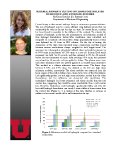
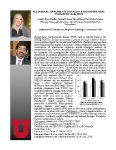
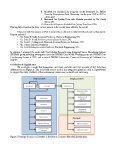
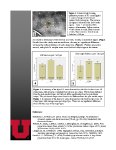
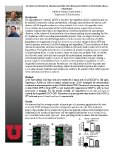
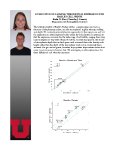
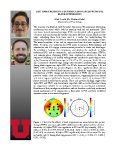
Show ! THE EFFECT OF IMMOBILIZED HEPARIN IN ATTENUATING UPSTREAM PLATELET-AGONIST INTERACTIONS Christopher Eixenberger (Vladimir Hlady) Department of Bioengineering ! Blood-contacting biomaterials have become increasingly common, however many trigger a foreign body response (FBR) in patients, causing a thrombus to form in the bloodstream, thereby increasing the risk of stroke or heart attack [1]. One common method of alleviating this issue is to bind anticoagulants, such as heparin, directly to the surface of a biomaterial. However, in attaching heparin to biomaterials, many aspects of how the anticoagulant interacts while immobilized remain in question. Past research efforts in the field of biomaterial hemocompatibility have only focused on local biomaterial surface properties. While these observations are essential for predicting a material’s behavior in circulation, they do not reflect the whole story. It is believed that downstream biomaterial-platelet interactions are strongly influenced by the transient platelet exposure to upstream platelet agonists such as fibrinogen that can prime platelets for adhesion and activation [2]. Platelets exposed to upstream agonists are thus more likely to adhere to, and become activated by, a downstream biomaterial than in the absence of such upstream agonists. We hypothesize that the presence of heparin on a biomaterial will reduce the number of previously activated blood platelets downstream from the biomaterial. To test this, a series of experiments were conducted. First, heparin was successfully bound to the surface of an aminated slide, representing a biomaterial. Then, the efficacy of heparin surface coatings in eliminating or attenuating the effect of upstream platelet priming was evaluated using the microfluidic flow of whole blood. In doing this, a microfluidic channel was created on top of the slide with three distinct regions: (1) The Upstream Region which had covalently attached fibrinogen acting as a blood platelet activating agonist, (2) The Middle Region which had heparin covalently bound serving to reduce the number of activated platelets, and (3) The Downstream Region which also had fibrinogen bound, acting as an area to bind any remaining activated blood platelets. Finally, whole blood was run through the microfluidic channel at a shear rate similar to a physiological venous shear rate. Imaging the slide after the blood perfusion showed clear results. There was a high density of adhered blood platelets in the Upstream Region and then very few platelets in both the Middle and Downstream Regions. This indicates that heparin does in fact reduce the number of activated blood platelets in downstream regions. References: [1] J. M. Anderson, A. Rodriguez, and D. T. Chang, "Foreign body reaction to biomaterials," Seminars in Immunology, vol. 20, no. 2, pp. 86–100, Apr. 2008. [2] L. Crowl and A. L. Fogelson, "Analysis of mechanisms for platelet near-wall excess under arterial blood flow conditions," Journal of Fluid Mechanics, vol. 676, pp. 348–375, Apr. 2011. ! |