| OCR Text |
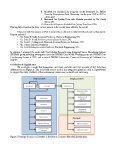
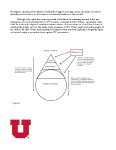
Show RELIGIOUS TEACHINGS, PERCEPTIONS, AND INTIMATE PARTNER VIOLENCE: A PILOT PROJECT Aarón Cárdenas-Paredes (Theresa Martinez) Department of Sociology The purpose of this study was to explore perceptions of the role of religion as a social factor influencing gender roles and potentially Intimate Partner Violence (IPV). A total of 6 respondents were included in the study, three who identified as members of the Roman Catholic Church (RCC) and three who identified as members of the Church of Jesus Christ of Latter Day Saints (LDS) in the Salt Lake Valley. All respondents were asked to take part in an hour interview with a newly constructed questionnaire. The questionnaire asked basic demographic questions as well as open-ended questions pertaining to the role of religion with regard to women’s rights, and gender roles. The results demonstrated a consistent support for gender equality and women’s rights. At the same time, respondents had mixed reactions to questions on abortion. The results seem to imply that religion has micro and macro levels of influence within society. As this is only a pilot project, further research needs to be conducted to better understand how religious teachings and perceptions influence IPV. Based on the interviews of religious members and interactions with both the RCC and LDS Church, I have created a diagram—Figure 1—to illustrate some of the patterns discussed by respondents which I would suggest are related to religious authority among other variables. The first element that we have to consider is that religious institutions have a set hierarchy which, in its most basic form consists of religious leaders, administrators, and the religious community. This hierarchical structure centers around religious authority and important considerations center around the role that religious texts play in religious communities—religious communities exist within the hierarchical structure, while others are still part of the faith but are further away from hierarchy. Everyone within the faith has access to religious texts. The main difference is that only religious leaders have religious authority to decide on the focus and applications of religious text to religious teachings. This can have implications with regard to religious teachings, mores, and norms. In fact, as religious teachings trickle down the hierarchy of religious authority from religious leaders to the religious community, erroneous perceptions and applications can occur, opening the door to abuse. The frequency, activity, and connectedness to a religious institution can greatly influence the following of religious teachings. This may relate to the degree to which religious teaching, mores, and norms are strictly followed by members. What must be considered is the proximity of religious members to the religious hierarchy. This does not mean that religious members that are farther away from |