| OCR Text |
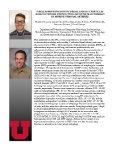
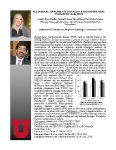
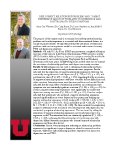
Show ATTITUDES TOWARD THE UTES NICKNAME AND LOGO Adam J. Whalen (Sara K. Yeo) Department of Communication Sports teams with American Indian (AI) nicknames and logos have encountered controversy over the last 30 years, experiencing backlash attributed to their negative cultural and societal effects. Discussion of the acceptability of these symbols and images has been particularly persistent at schools that use AI nicknames or logos. At the University of Utah (UofU), rhetorical analysis of the use of the Utes nickname and logo have been conducted (Endres, 2015). The present work adds to existing scholarship by using quantitative survey data to examine attitudes of people on campus toward the Utes nickname and logo. We posed the following research questions: RQ1: What attitudes do students, faculty, and staff on the campus of the University of Utah hold toward the use of the Utes nickname and logo? RQ2: Do students, faculty, and staff see value in learning more about the Northern Utes nation? RQ3: Are behaviors at sporting events (e.g., wearing headdresses, tomahawk chops, etc.) viewed as acceptable both by those participating in them as well as those observing the behaviors? We also wanted to view the controversy from a comparative lens so we could determine whether or not school affiliation and identity was impacting how students, faculty, and staff perceived acceptability in the use of the AI nicknames and logos. Because our survey was fielded on the UofU campus, we felt that individuals’ exposure and attachment to the Utes nickname and logo would impact their attitudes toward its acceptability. Because of these concerns, we hypothesized the following: H1: Students, faculty, and staff at the University of Utah perceive our use of the Utes symbols to be more respectful than other schools and professional sports teams with AI imagery and names. Method: We constructed a survey assessing student, faculty, and staff attitudes. We measured respondent identification with the Utes nickname and logo and acceptability of AI behaviors at sporting events – among other variables - on 7point Likert scales (1 = “Do not agree at all,” 7 = “Agree very much”). Data were collected using intercept survey methodology at the Marriott Library and A. Ray Olpin University Student Union building over the course of eight weeks. We also measured perceived acceptability of the Florida State Seminoles and Catawba College nicknames and logos. to compare with respondents’ perceptions of the Utes nickname and logo. This allowed us to determine whether respondents’ affiliation with the UofU was impacting their perceptions of acceptability. Data were analyzed using cross-tabulations, independent samples t-tests, and paired samples t-tests. Results: 91% of our respondents were students, with 9% representation from faculty and staff (N = 104). The majority of respondents were female (51%), white (78%), and between the ages of 18-23 (72%). Respondents identified strongly with the Utes nickname and logo. Roughly two-thirds of respondents perceived medium to high value in learning about the Northern Utes Nation, |