| OCR Text |
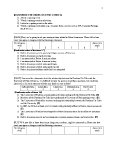
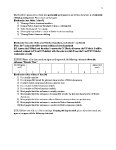
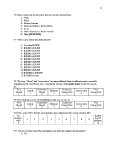
Show RELATIONSHIP BETWEEN COLLEGE MAJORS AND SELF-ESTEEM IN WOMEN Ashma Shrestha (Dr. Lesa Ellis, Ph.D) University of Utah and Westminster College, Department of Psychology According to the American Community Survey of 2009, 48% of the American workforce is comprised of women; however, in the Science, Technology, Engineering, and Mathematics (STEM) fields the number of women do not even amount to 25%. STEM as a group of disciplines has one of the largest gender disparities (Hill, Corbett, & Rose, 2010). For decades, women were expected to stay home and tend to the family’s needs however, in the past century, women have been an active part of the working force and have proven to be just as capable as men. Nevertheless, the number of women in STEM is very low in comparison to men. There are various reasons to explain these discrepancies and bias is one of them. In the Science Faculty’s Subtle Gender Biases Favor Male Students study, identical applications were presented to science faculty hiring committee members, with some materials labeled with a male name and others with female. Across different researchintensive universities, applicants who were thought to be male were ranked as more competent and hirable as opposed to female applicants. This difference strongly suggests the evidence of gender bias women are confronted by in the STEM fields as opposed to their male counterparts. Positive self-worth or self-esteem is defined as respect or a favorable opinion of oneself or pride in oneself (The Free Dictionary, 2016). Selfesteem is extremely important in academia because it helps determine one’s level of confidence to pursue higher education and their self-perception of their intelligence level in order to challenge themselves. In the STEM fields where the number of women has barely rose to 25%, as I previously stated, and the repeated discrimination and bias has a prominent presence, the environment for women and their self-esteem is very questionable. This questionable environment is the basis of this research project. This study attempts to understand both the self-esteem and body satisfaction in female college students in STEM fields v. Humanities/Liberal Arts/Social Sciences to explore whether majoring in specific majors, in different college departments, has an impact on female college students’ sense of self-worth. My participants age range was 18-3. It consisted of a convenience sample as college advisors from a Liberal Arts college in the Intermountain West distributed an online link to an anonymous survey to their students. The survey was also posted in social media where numerous female college students from a large research university also took part. The surveys consisted of four different parts: background, Rosenberg Self-esteem scale, The Body Appreciation scale, and the Weight Control Behavior scale. The questions in these surveys asked participants to rate their level of agreeance with given statements. These questionnaires ask questions specifically about the participants’ perception of themselves physically, psychologically, and |