| OCR Text |
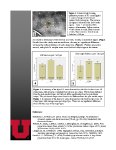
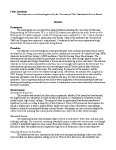
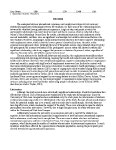
Show STRESS RESPONSIVE DEGRADATION OF MRNA ENCODING MITOCHONDRIAL PROTEINS Matthew Conley ( Jared Rutter ) Department of Biochemistry Background The degradation of cytosolic mRNA is crucial to the regulation of gene expression and can be induced by numerous cellular perturbations. Although many stressors are known, cytoplasmic mRNA degradation has never been studied in the context of organellar stress. Recent studies have demonstrated that mitochondrial protein import stress activates a cytosolic response that leads to the degradation of proteins bound for the mitochondria. However, in the context of a similar stress, there remains nothing known regarding the fate of cytoplasmic mRNA encoding mitochondrial proteins. Thus, we sought to study mitochondrial stress induced mRNA degradation. In order to assay the induction of mRNA degradation, we engineered several Saccharomyces cerevisiae strains in which GFP was fused to proteins involved in mRNA decapping and degradation. The accumulation of these proteins in subcellular structures termed p-bodies is commonly used to assay active mRNA degradation. We hypothesized that the accumulation of p-bodies would increase in response to mitochondrial stress. In order to induce stress, we chose two methods. First, we treated the cells with small molecules that uncouple the mitochondrial membrane and disable mitochondrial protein import. Second, we used FASII mutant strains, thereby creating a genetic model of mitochondrial stress. In order to assess p-body accumulation, we have employed fluorescent microscopy. Furthermore, we will perform an RNA-seq assay and measure the amount of mRNA encoding a subset of mitochondrial proteins that exists in a cell under normal conditions and compare the results to the amount of said mRNA present when mitochondrial stress is induced. Methods In the first method, wild type cells were treated for 3 hours with 10 µM CCCP or 200 ng/ml Rapamycin (RAPA) in order to induce cellular stress. CCCP uncouples the mitochondrial membrane and arrests protein import. RAPA inhibits TOR. Fluorescent microscopy was used to detect Edc3-GFP or Dcp2-GFP in cells treated with rapamycin or CCCP or with no treatment prior to imaging. For the second method, we engineered oar1∆ and lsm1∆oar1∆ mutants that expressed EDC3-GFP. Fluorescent microscopy was used to detect Edc3-GFP in WT cells and in oar1∆ and lsm1∆oar1∆ mutant cells. EDC3-GFP GFP DIC GFP DIC NT RAPA CCCP GFP DIC B DCP2-GFP NT GFP DIC GFP DIC RAPA CCCP GFP DIC **** **** 6 4 2 NT CCCP RAPA lsm1∆ + DCP2-GFP D average # of puncta per cell A average # of puncta per cell Results We observed that the average number of puncta per cell increased significantly after treatment with CCCP or Rapamycin when compared to non-treated cells. This leads us to believe that p-bodies do accumulate due to pharmacologically-induced mitochondrial stress. Additionally, the number of puncta per cell was significantly greater in oar1∆ and lsm1∆ oar1∆ mutants than in wild type cells. Thus, providing further evidence that mitochondrial stress leads to the accumulation of p-bodies. lsm1∆ + EDC3-GFP C 5 4 **** **** 3 2 1 NT CCCP RAPA |