| OCR Text |
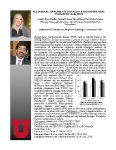
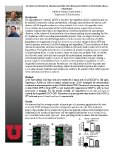
Show EL NIÑO INFLUENCES ON HOLOCENE WOODRAT (NEOTOMA ) ABUNDANCE IN COASTAL BAJA CALIFORNIA, MEXICO Roxanne M. Lebenzon (Jack Broughton) Department of Anthropology Climate variability has been found to have a significant impact on terrestrial animals, altering the landscape around them, often drastically throughout time. El Niño Southern Oscillation (ENSO) is a major source of climatic fluctuation, and has widespread control over terrestrial animals. Few studies, however, have investigated how ENSO influences small mammal populations, specifically throughout the Holocene epoch. Through a transHolocene mixed anthropogenic and raptor deposit in Baja California, the site Abrigo de los Escorpiones, and paleo-ENSO records, species relative abundance and the overall population fluctuation of Neotoma is examined in the context of El Niño. A significant portion of this study is dedicated to defining criteria for taxonomic species-level identification between Neotoma macrotis and Neotoma bryanti. We found that previous criterion presented on maxillary M1 to distinguish Neotoma lepida from other members in the genus is not consistent within a large reference collection. Therefore, the use of geometric morphometrics is employed to make taxonomic identifications. Preliminary results with reference material on M1 and M2 indicates successful taxonomic identifications, and allows for the method to be extended to M3 and the mandibular teeth as well. When applied to Abrigo de los Escorpiones, successful taxonomic species-level identifications can reveal patterning of Neotoma in the context of climate change. This study has broader implications of how small mammals are affected by climatic conditions, and how to better predict population changes due to climate changes in the future. |