| OCR Text |
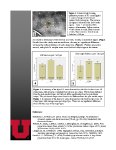
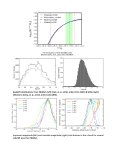
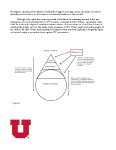
Show PROJECTION OF INFORMATION IN VISUAL CORTEX OF MACAQUE MONKEY: BUILDING CIRCUIT DIAGRAMS OF THE VISUAL SYSTEM Anny Pham (Alessandra Angelucci) Department of Ophthalmology & Visual Sciences Anny Pham Visual perception starts when photoreceptors in the eye detect light. This information is sent to primary visual cortex (V1) in the occipital lobe of the brain (Breedlove & Watson, 2013). V1 consists of neuronal layers in which cytochrome oxidase (CO) blobs and interblobs process color and orientation, respectively (Livingstone & Hubel, 1988). V1 projects light information to distinct modules in the adjacent area V2 (thick, thin, and pale stripes). A recently proposed model of V1-to-V2 projections suggests that thin stripes receive V1 input from blobs, and thick and pale stripes receive input from interblobs (Sincich & Horton, 2002; Fig.1). However, new evidence from marmoset studies suggests that interblobs project to pale stripes and the blob/interblob border region projects to thick stripes (Federer et al., 2009; Fig.2). This new model has not been extensively studied in macaque monkeys and therefore the model may be species-specific. Alessandra Angelucci M.D., Ph.D. Figure 1. Diagram from Federer et al., 2009 representing the Sincich and Horton, 2002 model of V1-V2 connectivity in macaque. This model shows V2 thick stripes receiving information from interblobs, noted by the black star. Figure 2. The Federer et al., 2009 model of V1-V2 connectivity in marmoset. Black star notes the unique “border” compartment in V1 projecting to V2 thick stripes. The objective of this study is to determine the distribution of macaque somas in layer 2/3 of V1 relative to blobs and interblobs for cells projecting to V2 thick, pale-medial, and pale-lateral stripes to observe if there is unique blob/interblob border region. Optical imaging was used in-vivo to identify V2 stripes. A retrograde tracer was injected into stripes and traveled back to V1 neurons in layer 2/3. After perfusion, brains were sectioned, processed using histological methods, and mounted onto slides for use with light microscopy. Every third section was stained for CO. The single sections containing the somas of labeled V1 neurons were aligned to an adjacent CO-stained section using blood vessel profiles. The distance of each soma to the nearest blob border using an index system was |