| OCR Text |
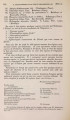
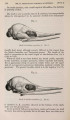
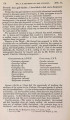
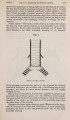
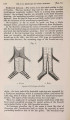
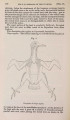
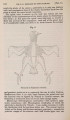
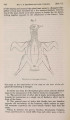
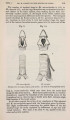
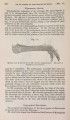
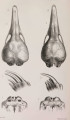
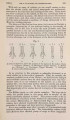
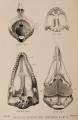
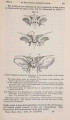
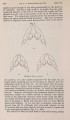
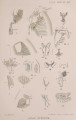
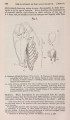
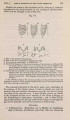
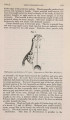
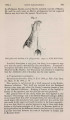
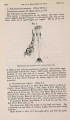
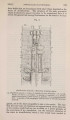
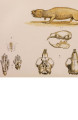
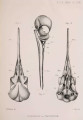
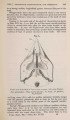
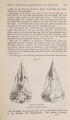
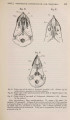
Show 900 DR. R. W. SHUFELDT ON TH K OSTEOLOGY OF THE [ In Tachycincta thalassina, as a representative of the Swallows (fig. F), we find the broad rower (Vo) doubly notched in front, whereas in a skull of Oroscoptes montanus, as a typical Passerine, there is but one such notch ; otherwise in its relations, as well as the hair-like maxillo-palatines with their backward-turned bulbous ends touching each other in the median line, these several elements are essentially similar. Moreover, we can easily see the evident middle place the palatines of this violet-green Swallow hold, both as to their form and arrangement, between the Swifts and more typical Passeres. Such a serial resemblance in gradation is again beautifully exemplified in the mandibles of these birds. In Panyptila both the angular processes and the ramal cavities are missing ; they are both fairly well developed in the Swallow, while in most true Passeres they are a decided feature. Of course there is but little or no resemblance between the mandible of a Swift and of a Humming-bird. What I have said about the mandibles of these several forms applies with equal truth to the hyoidean apparatuses; in all, the first and second basibranchials are in one piece, and the elements of the glosso-hyal portion remain in cartilage throughout life. Of the remainder of the Axial Skeleton in Trochilus.-One cannot well study the spinal column of Alexander's Humming-bird without the aid of a strong lens ; the writer was obliged to bring to his assistance a microscope armed with a 2-inch objective. By the help of this instrument I count 13 vertebrae in the cervical region before we come to that one which bears the leading pair of free ribs. In the middle of the series these develop very long postzygapophyses, and the finest imaginable parial parapophyses. The neural spines are nearly entirely suppressed throughout the series, while the fifth, sixth, seventh, eighth, and ninth contribute to form the carotid canal. After these a strong median hypapophysis is found on each segment. Tbe articulation of the centra are heteroccelous. Freely suspended ribs are found upon the 14th and 15th vertebrae, the last pair having epipleural appendages. The 16th vertebra has a fully developed pair of ribs, which are the first to connect with the sternum by costal ribs. This vertebra is characterized by a low neural spine and single long median hypapophysis. The 17th vertebra also possesses perfect ribs, and in it the hypapophysis is not so prominent, and the neural crest is still inconspicuous. Strange to say, the 18th and 19th vertebrae, with complete ribs reaching the sternum by hsemapophyses, are thoroughby anchylosed with the pelvic sacrum, having their neural spines and hypapophyses merged into each other as common superior and inferior crista respectively. The former soon subsides upon the dorsal aspect of the sacrum, while the latter is met by a transverse crest developed by the 21st vertebra, beyond which it subsides over the body of the 23rd vertebra. This arrangement forms a crucial raised crest on |