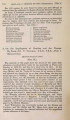
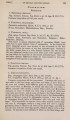
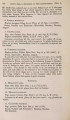
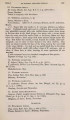
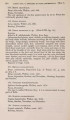
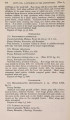
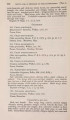
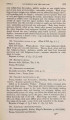
| OCR Text |
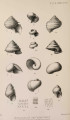
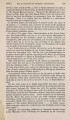
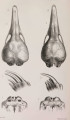
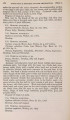
Show 214 MR. H. H. JOHNSTON ON THE [Mar. 3, It is very evident therefore that the Wild Cat does not exist in Ireland; had it been otherwise, undoubted examples would long since have been discovered, and any doubts finally set at rest. Such not being the case, we must exclude Ireland from the list of countries inhabited by Felis catus. Felis catus, so far as is known, inhabits the northern part ot Great Britain, where it has become extremely rare, France, Germany, Poland, Switzerland, Hungary, the southern part of Russia, Spain, Dalmatia, Greece, and part of Turkey. It is not found in Ireland, Norway, Sweden, Italy, or North Russia. A letter was read from Mr. J. H. Thompson, of New Bedford, Mass., U.S.A., C.M.Z.S., stating that " among some interesting land Mollusca collected by Mr. P. G. Thompson on the island of Eleuthera, or rather on a small ' key ' adjacent to the north end of Eleuthera (Bahama Group, West Indies), were several specimens of Helix (Hemitrochus)filicosta, Pfr. (P. Z. S. 1845, p. 73 ; Reeve, Icon. no. 1437), the locality of which had been previously unknown. The following papers were read :- 1. General Observations on the Fauna of Kilima-njaro. By H. H. JOHNSTON, F.Z.S. [Received March 3, 1885.] I have been asked to say a few words of a general character to precede the papers which will be read before you to-night on the subject of the collections made by the Kilima-njaro Expedition. This undertaking, I need not remind you, was made at the joint expense of the British Association and the Royal Society. The Kilima-njaro Committee which was formed by these two Societies honoured me by choosing m e as the leader of the Expedition, and placed .-£1000 at my disposal. This sum, while amply sufficient for equipping and supporting an ordinary African expedition during six months, did not allow of m y taking any European collectors with me, as every individual who had any knowledge of natural-history collecting required his travelling expenses to be paid between London and Zanzibar, going and returning, and about £100 salary, with provision made for his widow and children in case of untimely demise. I did not leave England, however, with an idea that the task of making the natural-history collections would solely devolve on myself. Collectors from India had been spoken of and their expenses were to be defrayed by the authorities of the Indian Botanical Gardens. On arriving at Zanzibar I found the disagreeable news awaiting me that none of these promised helpers could be sent owing to their great dislike to travelling in Africa. Consequently I had to depend on the chance aid of such natives of Zanzibar accompanying my caravan as might evince any taste for natural-history. |