| OCR Text |
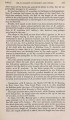
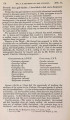
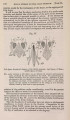
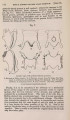
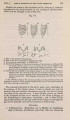
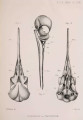
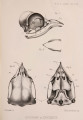
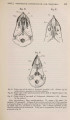
Show 392 DR. ST. G. MIVART ON THE ARCTOIDEA. [Apr. 21, vores. The postorbital processes of the frontal are smaller than in Ursus. The palate is very broad, and much more prolonged behind the molars than in Ursus \ The zygomata are short and extend straight backwards and outwards without being arched outwards. Instead of lateral processes to the basioccipital there are processes of the temporal bones. , , The teeth are relatively very small, and the first upper incisor is absent or soon falls away. In the milk-dentition* the second and third molars both above and below are very small and simple. The fourth upper one has two outer cusps and a large internal cusp, with a minute cusp in front of the first of the two outer ones. It is much more sectorial than is the fourth premolar, which replaces it. The fourth lower molar has three outer cusps ; the most anterior is very small, the next very high, and the third rather small. There is a fourth minute cusp inside the middle outer cusp and a fifth inside the third outer cusp, and slightly smaller than is the third cusp. •The tongue has a large lytta. Large fungiform papillae are scattered all over the tongue's surface. The flattened papillae are rather small and inconspicuous. The circumvallate papillae are remarkable : there are two series of very conspicuous and very close-set papillae, which together form a very obtuse angle. The liver is very like that of Nasua or Procyon, only the right central lobe is rather smaller compared with the right lateral lobe, and the left central is very small. The kidney is described in the Catalogue of the Royal College of Surgeons as having two mamillae to each of its lobes. The brain has the same characters as has the brain of Ursus. CLASSIFICATION OF THE ARCTOIDEA. With good reason has Professor Flower remarked upon the difficulty of subdividing the great Arctoid group in a satisfactory manner. The characters most available for this purpose are the dental characters ; but these are eminently adaptive ones, and would, taken alone, serve but to mislead the inquirer, as we have seen with Proteles and Hyana, Arctictis, Cynogale, and Cryptoprocta, amongst the iEluroids. The Bears form a small and very natural section, characterized not only by their peculiar dentition, but also by their complex kidneys and completely plantigrade feet. Similarly the Otters, with their conglomerate kidneys and peculiar cranial structure, also form a small, well-marked group. The Badger, with its caudal pouch and exceptional dentition, presents another type round which a few genera may be grouped, while the Raccoon and Coati form another section, to which Bassaris and Bassaricyon may he added, while Cercoleptes can, I think, find no other allies better suited for its adhesion than are these. The same I believe to be the case with Ailurus, but Ailuropus presents us with 1 The palate in Ursus may be very little prolonged beyond the last molar, as in U omatus, no. 815 in the Museum of the Royal College of Surgeons. |