| OCR Text |
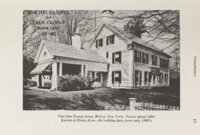
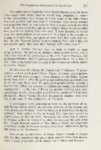
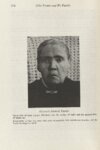
Show Sidney Elizabeth hardly seemed like a Tanner "mother" to 231 him, or he like a "son" to her. It is not known what kind of financial arrangements John Tanner had with his sons in Bolton or later. A story has come down in the family that Elisha Bentley, the oldest of John's children, was unhappy when his father sold out at Bolton and moved to the Mormon head at quarters he had a Kirtland, Ohio. special equity Since he in the Tanner was the "oldest son" he felt holdings in Bolton. Whether the story has any foundation in fact is not known, nor is it known what provisions, if any, John made for his children who did not follow him West with the Mormons." In addition to Elisha Bentley there was one other son, William a sister Matilda (Randall) older than Sidney. Whether Stewart, and they made any claim to the considerable John Tanner holdings is unknown. It is a good guess that the John Tanner family was a very close-knit affair and that John, in good Old Testament fashion, presided over the whole in a benevolent and paternalistic fashion. That his sons loved and admired him is beyond question, and they challenged his the married ones, while they would not have even right to govern the entire family, remained in the fold. When John Tanner left Bolton, New York, for Kirtland, Ohio, that Christmas day in 1834, Sidney, though he was married and the father of two children, was still "one of John's sons" and was part of the family. It is doubtful if this relationship changed much during the life of John Tanner. The group seems to have been a "one man's family" in almost every particular. Sidney is mentioned infrequently in most histories and diaries. This may be due to two causes: In the first place the more dominant John held the purse-stings and made the decisions about giving away the property to the prophet in Kirtland; and second Sidney was naturally shy and was glad to let his father do most of the talking and make most of the decisions. Sidney never sought the lime-light or tried to get attention, but this does not mean that he was lacking in good judgment or decision making, as later events will show. Because our information is incomplete, it is not possible to follow his movements with certainty, but it is likely that he was in Kirtland less than a year, and then was called, along with John Joshua, to go to Missouri. On January 18, 1835, the prophet made |