| OCR Text |
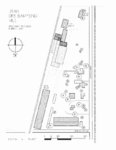
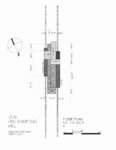
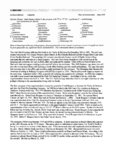
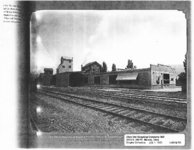
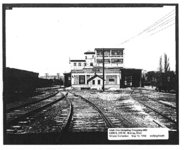
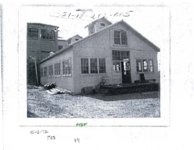
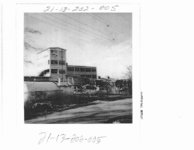
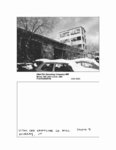
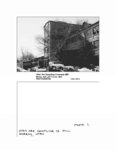
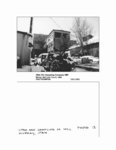
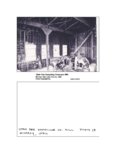
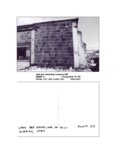
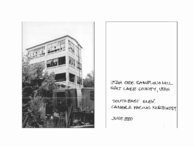
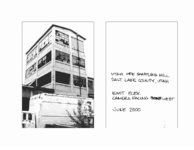
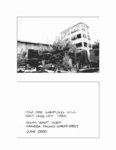
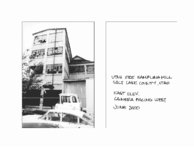
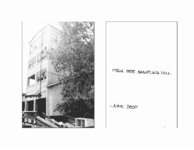
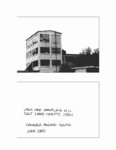
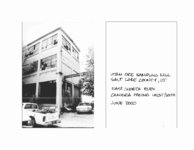
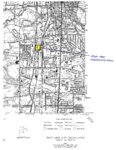
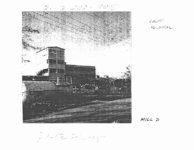
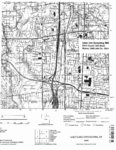
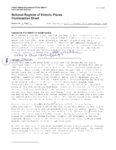
Show Chapter 1 The Piolleer Period (1847-1899) changed to the Hanauer at that time . The plant originally consisted of two blast furnaces but continued to expand until 1895, when it produced 8,170,000 pounds of lead; 625,000 pounds of copper; 770,500 ounces of silver; and 7,820 ounces of gold. The Hanauer was purchased by ASARCO in 1899 and was closed and dismantled by 1902. The Morgan was located along the Utah Central Railroad about one mile north of the Germania near Big Cottonwood Creek. There are no r~mains of the smelter today. Several smaller smelters were constructed prior to 1900. The American Hill was completed early in the 1870s and actually may have been the first smelter completed at Murray, although documentation is sketchy. More likely, this smelter was constructed at about the same time as the Germania . The smelter underwent extensive modification in 1873, when two new furnaces were installed, giving it the largest blast in the Territory ready for smelting. The smelter did not last long, however, and the six buildings once associated with it were dismantled. The American Hill was located east of State Street at about 5189 South. This area now houses the National Guard Armory and the adjacent Salt Lake County Fairgrounds. The Wasatch Silver Load Works was built in 1871 and commenced operations in 1872. It had one reverberatory and two blast furnaces with a capacity of 50 tons/day. The smelter was located on the north side of Little Cottonwood Creek with the Germania opposite on the south. This location is now the site of the Utah Product Company Cannery (c. 4850 South 80 West). The Franklyn or Horn Silver smelter was completed in the summer of 1880 and went into operation in June 1881. The Franklyn smelter consisted of five 60-ton furnaces in addition to a roasting furnace. Erected for "several hundred thousand dollars" and employing 180 men, it was the largest smelter in the Territory and was regarded as one of the most efficient smelters in the country during its day. The Franklyn smelter processed ore from the Horn Silver Mining Company's Frisco Mines. The Frisco Mines suffered a massive cave-in during 1885 that closed the mine in February 1885 and the smelter by March 1885. The company later underwent administrative reorganization in 1887, when it was found that the officers had been misappropriating the company's working capital. The smelter never reopened and was dismantled in 1890. The Horn Silver smelter was located in the area now occupied by the Murray City Power Plant (c. 4800 South 153 West). There is no indication of either till' Wasatch Silver Load or the Horn Silver smelters today . Several of Utah's early brickyards also got their start in MurrCl Y· Walter Henry Atwood operated a brick industry on land he received as a land grant from United States President Ulysses S. GrClnt ill 1870. Atwood is reported to have taken down an entire hill of c1C1Y with his brickmaking activities at 5300 South and State Street. The second brickyard in Murray began in 1878 and was operated by the Cahoon brothers . This yard was located along 5300 South and west of the Union PClcific Railroad tracks. Cahoon Brothers, now cClllcd Interstate Brick, later moved their operation to Brickyard Plaza, located at 3300 South 1300 East, and then to their present location in West Jordan. Murray's final brickyard was the Utah Fireclay Company, located at 200 West Fireclay Avenue. Utah Fireclay begClIl operation in the 1890s, specializing in thermal bricks used to linl' the smelter kilns. Along with the centralization and industrialization of the 1870s came the solidification of the community. The name of South Cottonwood was dropped in favor of Franklyn to acknowledge till' construction of the Franklyn smelter in 1876. The name was Clgail1 changed in 1885, the same year the Franklyn smelter closed and the area's first post office was established. The new name \,."as assigned to the post office by the first postmaster, Harry Hayn es . Haynes was granted the appointment as postmaster by his longtime friend, TerritoriClI Governor Eli Murray (1880-1886), illld the post office was named after the governor. As people bcgtln to concentrClte Clround the postClI stop t1nd budding cOll1nll'rci ,d center, the community retained the name of Murray . The COI11 munity of Murray was formed by 1890 but was not incorporClted until 1902. More changed than just the name . The quiet agricultural COI11 munity began to develop into a mining boomtown as eight different smelters were constructed between 1870 and 1885. Along with industry came expanded social entertainments. These entertain ments provided both opportunity and social woes, resulting ill conflicts between the immigrant laborers and Mormon farmer s . Murray's west side soon became a haven for the smelter workers . This area was known as "Bergertown," after Christian Berger, who originally homesteaded the area around 1860. Bergertown WClS located c. 5000 South and 300 West. As more and more people CClll1l' 11 |