| OCR Text |
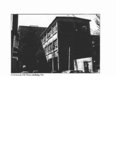
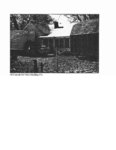
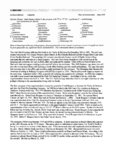
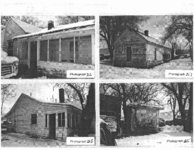
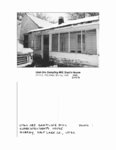
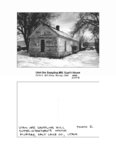
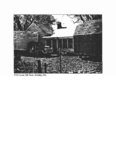
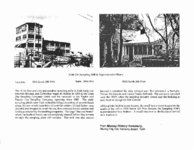
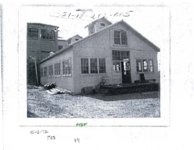
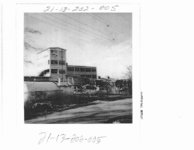
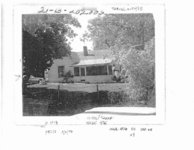
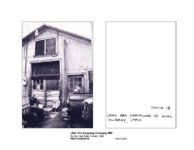
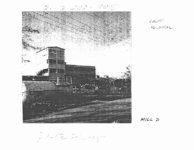
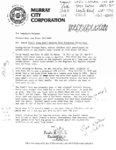
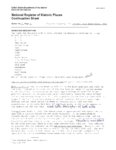
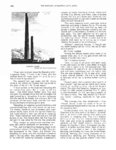
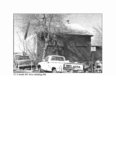
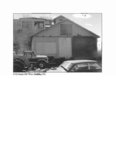
Show 256 THE HISTORY OF MURRAY CITY , UTAH expense to the occupants."" At least the smelter officials realized some of the problems which were facing the employees and attempted to do something about them . But even this effort didn 't last too long because by 1937 Mr. Clegg reported that the club-house was closed and some of the houses were unoccupied . One section of Murray on the west side became a haven for the sm elter workers. This area , known as " Bergertown ", was settled by Christ ian Berger who cam e to Utah from Bern , Switzerland around 1860. Berge rtown was a little community in itself, just south of 4800 South on the Big Cottonwood Creek , west of the tracks. As the smelters came to Murray in the 1870's and 1880's, more people came to this little settlement which was nestled right next to the slag dumps. As the Greeks came around th e turn of the century , they filtered into th e community and the original members filtered out until it was mostly a Greek community. It was right around 1900, according to Ev Berger,"" that Bergertown began to decline from what it had been to a run-down village . As Bergertown was engulfed by the slag dumps , the foreigners gradually moved out to seek employment elsewhere. Today only a few of the original homes remain and some of these are quite rundown . In the interview with Mr. Berger , he pointed out that the fore ign ers were a transient lot and moved in and ou t of Murray according to the status of the smelter. In the late years of operation , particularly during the depression , the smelter would operate for si x months and be closed down for six months. The smelter provided little job security for the laborer, and because of this seasonal work , the laborers were forced to take the cheapest housing possible which in this case were the houses located closest to the smelter. Another point Mr. Berger brought up was the fact that at the time the smelter was operating , the Company brought Greeks and Australians into the area to work and this put a stress on the housing availability and was probably another factor in creating the Murray smelter slum-area.-'o Not only did the foreign employees have to deal with a housing problem , they also had the problem of personal health . Since it was the foreigner who did the manual labor and dirty work at the smelter, it was also his plight to come into contact with the deadly fumes the smelters produced. Many of these workers were " leaded " and lost their jobs because of it. One smelter worker I had the opportunity of interviewing , personally experienced this awful fate . He was from Armenia 38Ibid., p. 77. 3!'lnterview with C. Everett Berger, past President, Secretary-Treasurer of Utah State AFL-CIO, 12 November 1975. 4ulbid. and came to Murray in the early 1900's for rel igious reasons , but because the smelters were accessibl e, he took that up as his work. During the course of his employment he got a bad case of what he called, " lead silicosis" . The Company doctors , which the A . S. & R. provided for th ei r employees free of charge , didn 't believe that he had such a condition . He later went to a doctor in Ogden who X-rayed him and confirmed that he had silicosis. The Ogden Doctor's report was taken back to th e Company Doctor, but he did not report the cond ition to the Company officials. The employee reported it himself, informing the smelt er bosses that he had been advised by the Ogden Doctor that if he worked anymore in his condition. it would probably kill him. The Company , th erefore laid this man off and he was without work for over three years without any kind of pension. It should be mentioned that before he was laid off, he was earning the enormous wage of $2. 00 per day." an d tl whic h sm elt e peo pl ( made It a li a n ~ wa rke l Murra) for th l down . th ey v make names chrill i ray - Th E. establ ic R. taki nearly mines ran au the yec th e Ian a majo arseni c nearly , and th i the de, sm elter tion pic still th e the deC' The man 's wife pointed out that they we re only abl e to li ve because , " this old lady had a lot of economy." The smelter took advantage of its fo rei gn help . Many received the same treatment I have related ., e The foreign ers survived in Murray because they were of a different breed than t ~l e typical low-income American living today. The picture of the foreign clement in Mu rray whi ch has been painted so far in this report has been quite bl eak, but to their credit, the foreigners did help to bring a spi ri t of pride and solidarity to the City of Murray. Th e paper, bratio n HowevE Bradfor( announ r ently. ' on Octe Plant w began. Dr. J . M. Prpich , principal of a Murray elementary school , grew up among the Ital ians Greeks and Slavs during the smelter era and remembers it as a great period:" The foreign sto ck he recalls , had a sense of patriotism and pride in America and they came to this country to seek a better life. Perhaps they found that life in Mu rray In relationship to the more affluent east-side, thei' situation was pretty grim , but to the foreign er~ way of thinking , he now had much more th an hf had had in the old country. Even during sm elte shut-downs , the foreigners were an industr ioU ~ lot. To accept welfare was unth inkable. Th el would accept any kind of a job in order that th e" families could eat , even if it meant bootl eggin ;' These people also had a very real sense of clost'· ness and concern for each other. They did eve thing possible to help their neighbors and w er~ very family-oriented. This is one quality I feel tho community lacks today. The Smelters of Murray brought the fore ig ne" Th e end to before When n Plac e to ent, the transiti a the A. S fOund r WhiCh d. are mos ( 0: ·llI nte rvi ew wi th Mr. and Mrs. Armaneg Kezerian, Mu rr.; Utah, 8 Octo ber 1975. 1~ lb i d .. also Berger interview, 12 November 1975. . I::jnterview with Dr. J . M. Prpich, Principal Grant E' mentary, Murray, Utah , 14 November 1975. --11. I'lbid I:Wet '''Ahl t 17Mur. l ! - I' lbid. |