| OCR Text |
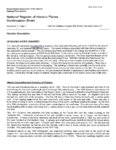
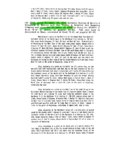
Show lected to further smelting type treatment for the recovery of gold and silver, :admium, bismuth, antimony and many others. The next problem is marketing of the recovered, processed and refined minerals and metals. Marketing of Metals and Minerals Basically different principles are involved in the marketing of metals and the marketing of nonmetallic minerals. There are exceptions, a few of which will be discussed, but the rule generally holds true. Refined metals are salable as such over wide geographic areas, even crossing oceans when local supply and demand are out of balance. As metals are basic elements, it is possible to bring the refined metals to exact specifications of purity, which fact practically eliminates competition as to quality. Nonmetallics are more available in nature than the metals and are usually more easily and cheaply mined. They meet competition close to home, so to speak, and therefore the economic value of anyone deposit is governed to a great extent by the geographical relationship to other deposits and to the markets for the particular mineral. Nonmetallic minerals are usually used in the form in which they come from the ground and therefore the grade and purity also affect their usefulness and their marketability . Deposits of the nonmetallic minerals used in manufacturing are commonly owned and mined by the company engaged in the manufacture of the end products. costs of milling, smelting and refining, and transportation cost to the marketing center. Metal prices change from time to time, and the profit position of the mine operator obviously changes when the price changes. The uncertainty of future prices thus makes mining a gamble beyond the prospecting and exploration stage when effort and money are risked in trying to find a mine. Iron is a notable exception to direct marketing of metals, in that a substantial portion of iron mining is done by companies which smelt the ore, make the steel and manufacture articles for use . The major copper companies are also tending toward becoming integrated industries, in that they have acquired manufacturing plants for making salable goods from the copper which they mine, smelt and refine. The capital investments made in the mine openings-the excavations of an open pit, or the shafts, tunnels, drifts, raises, stopes, etc., in the underground operation-are all made on the premise that mining the ore will be profitable. If such does not prove true then such investment is a total loss, for the mine openings cannot be moved or sold and thus have no salvage value. The ore reserves are also valueless if mining costs prove greater than returns from sale of ore . This situation might be contrasted with business and manufacturing ven tures, in that failures in these fields leave opportunity to salvage some of the capital investment because inventory, equipment, buildings and land are usually salable. In the nonmetallics there are some notable exceptions. Some, such as coal, fluorspar and gilsonite, are mined in much the same manner as the metals, are sold to users independent of the producing companies and also move considerable distances to markets. Potash and phosphates are other nonmetallic minerals marketed over a wide range. Sand and gravel is typical of the short marketing range of nonmetallics. Here in Utah almost every village has its own sand and gravel pit. High transportation costs, low mining costs and common occurrence prevent its being hauled for any great distance for sale. Gypsum, cement rock and brick clay are typical of integrated industries based on the nonmetallics and of the competitive limits of marketing. Gypsum is quarried from very extensive deposits at relatively low cost near Sigurd, Utah . It is hauled a short distance to plants at Sigurd and made into plaster, rock, lath, wall board, etc. Its marketing area is limited by competition with similar plants in Colorado, southern and central California, Arizona, Washington , Oregon and Montana. Actually, the companies in each area sell as far from their plants as their cost of production and the cost of transportation permit; that is, to the most distant points where they can better or equal the offering price of a competitor. If the costs at any plant increase in relation to its competition, then that plant's competitive area shrinks and the competitor's gains. The market for metals is based on a standard price and uniform quality at the principal marketing point for the metals ; i.e., New York for lead, St. Louis for zinc, and the Connecticut Valley brass manufacturing centers for copper. Thus, as stated previously, the mine operator competes against price rather than against other mines. The metal miner can always sell his products, but whether he can do so profitably depends upon his ability to produce at a lower cost than the price which he receives . Most metal mines sell their ore production to mills or smelters at the prevailing price for the metals contained in the ore, less metal losses in treatment, f)() 21 |