| OCR Text |
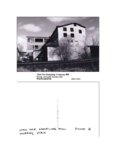
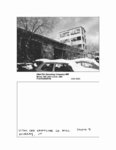
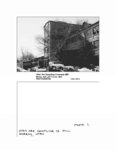
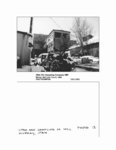
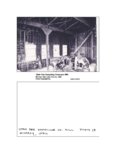
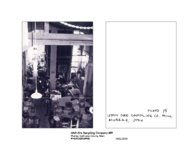
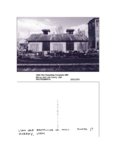
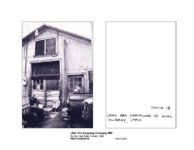
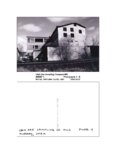
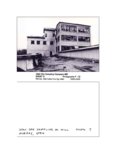
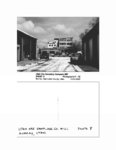
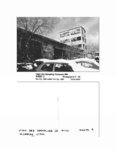
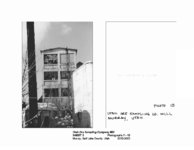
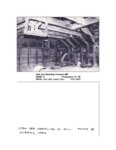
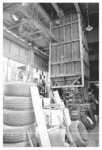
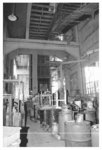
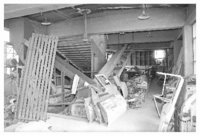
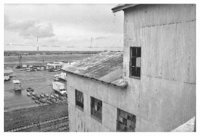
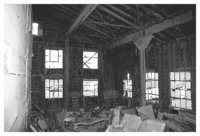
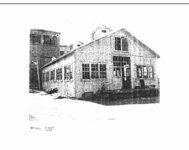
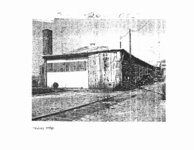
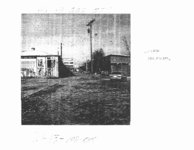
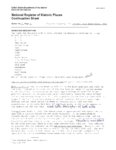
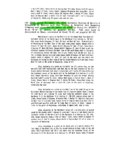
Show Developing and Equipping Mines Development of a proven economic mineral deposit consists of making the necessary underground openings and/ or surface improvements to permit effective mining of the ore. The extent of the development varies with the type and size of the ore body. Some take several years of work to prepare the deposit for profitable mining. Large low grade deposits usually require the most time and the greatest investment to develop. In others, mining of the ore starts almost coincidentally with the beginning of development. Small high grade deposits usually follow this pattern. Coincidentally with developing the mineral deposit, the mining plant and the necessary items of equipment are carefully planned, selected and installed, including hoists, air compressors, ore bins, repair shops, haulage systems, pumps, rock drilling machines, mechanized loaders for handling the broken ore, light, power and water systems, ventilation equipment, material storage yards, access roads and housing facilities for the workers if the mine is in an isolated area. The expenditures in developing and equippin g are made as an investment in the mineral deposit and are expected to be recovered from mining ore. Prospecting and exploration expenditures are also real costs. Profit is realized only after the mine has paid back all exploration and development costs. Mining Ore Deposits Mining in broad definition includes all processes for extracting minerals from the earth's crust, whether the mineral being extracted is solid, liquid or gaseous. Thus gas and oil wells, salt recovery through evaporation, open pit, quarry or underground operations all are mining activity . However, we will not attempt to discuss here the details of each type of mining operation. --J Q <[0 Cc~ l.&-J - :2 Most nonmetallic solid minerals of relatively low raw material va lue, such as sand and gravel, gypsum, limestone, cement rock, clays, rock asphalt and stone, are mined usually from quarries or pits. Some nonmetallics of relatively high market value, such as fluorspar and gilsonite, are mined by underground methods. Coal is mined in Utah almost entirely from underground mines. In some other areas "strip" coal mining (open pit) is used extensively. 2 w 1-----1 _0 :L~ " The metals are mined by both open pit and underground operations. The iron mines of Iron County and the copper operation at Bingham are good examples of large tonnage open pit mines. W ~ Underground mining is probably the most complex of all the mining operations. Mechanization is adaptable to only a limited extent in most underground mines. Therefore, a high percentage of the mining cost is for manual labor. In western underground mines, labor represents about 60% of the total mining cost. ~o I"- ~~~--~--~--~~--~---u ::JV\ -.5 '0 ~ co 0 I~ ~ ~ ~1\ 14 ~ - ~ ~ ° 33& <4 uJ "" 1 j>;: -:;- Mining, or extraction of the ore, begins after the necessary mine openings have been made and the equipment installed in the development phase. The actual ore extraction operation is ca lled stoping. In some mines the rocks encasing the ore are very firm and the ore can be removed without support. In others the encasing rock is fractured and requires support by timber or waste rock fill. Water is often a problem requiring pumps, water lines and much power to bring it out of the mine. Basically, th e ore extraction process involves drilling holes in the ore in which explosives are placed to break it, after which the broken ore is loaded and transported to the surface. Trains or hoists or a combination of the two are used. 1<; |