| OCR Text |
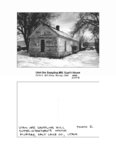
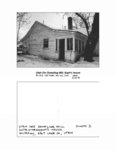
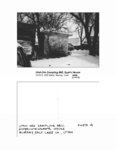
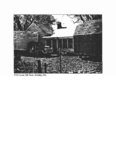
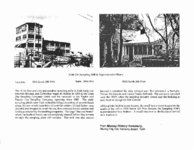
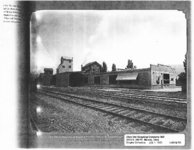
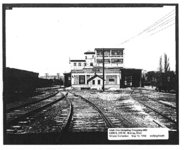
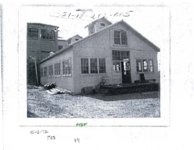
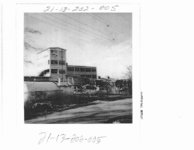
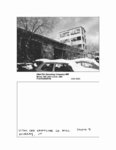
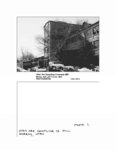
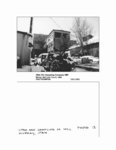
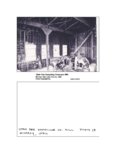
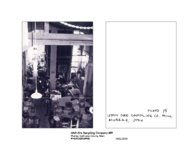
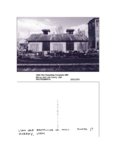
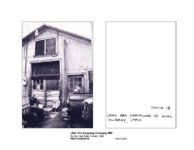
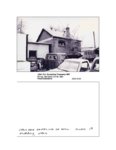
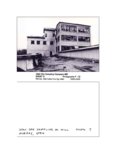
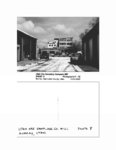
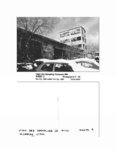
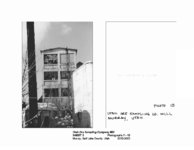
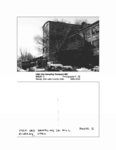
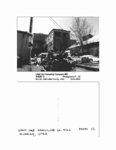
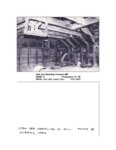
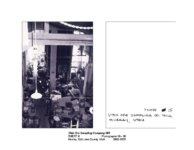
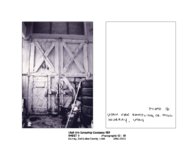
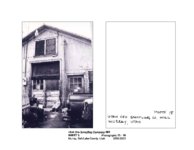
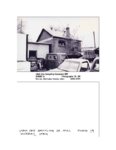
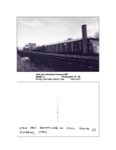
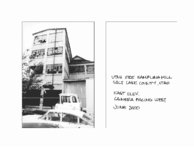
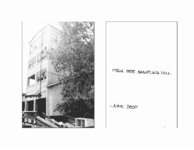
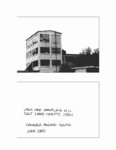
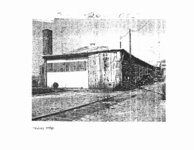
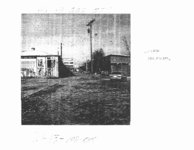
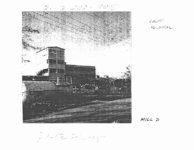
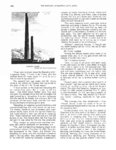
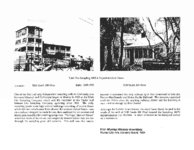
Show 278 Tales of A Triumphant People was then bought by the Pennsylvania Lead Company, with a Mr. Knapp in charge, and the late Samuel Perry as gene~al superintendent. At this time it was named the Mingo. This smelter continued to operate until 1898, when it was taken. over by t~e American Smelter and Refining Company, who dIsmantled It and made their headquarters at Murray. Another s!lle~ter (!he Flagstaff) was built in 1873, where the present Jumor hIgh school now stands. Wessel Brothers were in charge, with Fred Meyers as superintendent. It operated until 1877. Thomas Allsop, Sr., was bookkeeper and Allen Hall was carpenter. There were three sampling mills, the Pioneer, the W~satch, and Scott and Anderson's. A man named McIntosh bUIlt the Pioneer in the spring of 1874. Fred Day was the manager, a~d built the home where A. J. Cushing lived. Once a year the mlll was cleaned out; the sides were decorated with flags and bunting, and a big masked ball was enjoyed by everyone. In 1876 there was a row of ore sheds just east of the Pioneer sampling mill. Luke F. Wells was agent and loo~ed ~fter.the ore which was shipped from the old Telegraph Mme m Bmgham Canyon. Of all the smelters in existence before 1900, the operation of the Mingo at Sandy, under Sam Jones, is most familiar to the older men in the Midvale plants; many of whom worked there and say that James could put any kind of rock into ~ furr~ace and make it into bullion. Before James came to the Mmgo m 1892, seven furnaces were in blast, smelting 85 tons of charge a furnace day which made the total capacity of the plant, 595 tons of cha~ge a day. All the work of unloading, sampling, bedding the ores, and operating the roasters, was done by hand, a~d 1,200 men were employed. After James took over operatIOns, he raised the blast on the furnaces from 12 pounds to 24 pounds pressure, put through 195 tons of charge a furnace day, and ran four furnaces making a total of 780 tons of charge a day. Improvements f~r handling the ore were put in and the plant was finally operated by 500 men. The coke was all forked, and the fines or "coke breeze," which were not only useless but harmful in operations, were thrown over the dump. Nothing remains except the Mingo slag. d.ump to suggest that Sandy, now a quiet town of homes and thr~vmg g.ard.ens, was once the greatest shipping, smelting, and samplmg pomt m Utah. The smelters and sampling works of Sandy are ~one ~ore~er, but if the older residents could bring before our ImagmatIOn the And There Was The Founding Of Other Towns 279 phantoms of the past, we might see the early English-owned furnaces, where all the smeltermen were Welsh and Irish· the long ~heds at the sampling works, with a train unloading o;e on one SIde and on ~he opposite side another train reloading it; the streets blocked WIth teams and wagons hauling ore from Cottonwood and Butterfield Canyons, and when the ~'skinners" could w~sh the dl;Ist from their parched throats at seventeen places WIth somethmg stronger than water from Little Cottonwood. It was b~fore the days of the railroad, however, when the first wate~ dItch was. made from the mountain down through Sandy. BIshop Archibald Gardner of West Jordan secured a ~en to work on it, one of whom was Hyrum Lancaster, crew who s~l1d, W~ used to put eight yoke of cattle on the plow to make t~e dItch. BIshop Gardner rode the pony and told us to follow WIth the oxe~ as ~e directed." Today this same ditch is used by the Sandy IrngatIOn Company. When the railroad came, the company put up five or six tanks of about forty gallons capacity each, and filled them daily fro?I the tender on the engine. This furnished the water for cul~nary use for ~while. Later on a well was dug near the present Kmghts of. Pythias Hall and a charge of five cents a bucket was made by ~Ishop Holman, who operated the well. In 1880 a well was dug Just across the street from W. W. Wilson's new residence. ~h~n the smelters were built, water was brought down and stored m a ~ond at Thomas Allsop's, and thea piped to the smelters. The. CIty canal came through in 1880 and the East Jorda? Canal m 1883. Charles C. Crapo bought pipe from Alta and pIped water to Sandy in 1898. A tank was built and water conveyed to town. of Occas~onal~y a theater group would come to town. There was very httle If any religious activity before 1882-83 when a ~ard was organized, with Ezekiel Holman as bishop. B~n Camp IS remembered for the songs he sang "A Year Ago I Looked So ~well," and "Where Did You Ge~ That Hat." A whirligig fu.rmshed amusement for old and young. It was a big, long slab WIth two stakes in each end. The men would push the thing around,. and .the girls would hang onto the stakes. Then there was a bIg swmg, and the skating pond at Allsop's, which is now farmed by Charles M. Anderson. A one-room school building was built near the site of the present school. Zina Clinton was an early teacher. This building was sold to Charles D. Brown. It was later moved to the Bur- |