| OCR Text |
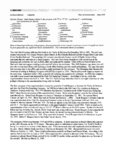
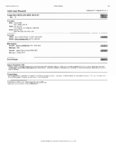
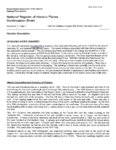
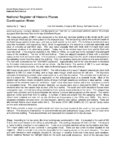
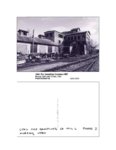
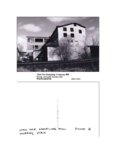
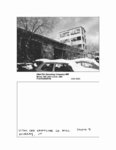
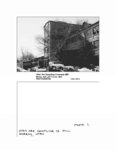
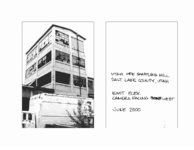
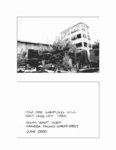
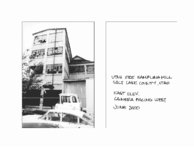
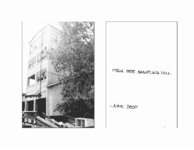
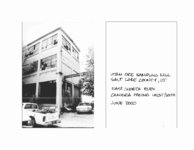
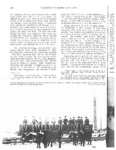
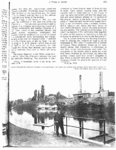
Show OMS No. 1024-0018. NPS FOITIl United States Department of the Interior National Park Service National Register of Historic Places Continuation Sheet Section No. ~ Page ~ Utah Ore Sampling Company Mill, Murray, Salt Lake County, UT culturists, and livestock breeders. Associated enterprises included a number of feed stores, meat markets, and a woolen mill. In the second half of the twentieth century, Murray thrived. Though it had lost its industrial base, the population jumped from 5,740 in 1940, to 9,006 in 1950, 16,806 in 1960 to nearly 40,000 today. The population explosion was mainly due to the proliferations of subdivision development as Murray was subsumed by Salt Lake's suburban sprawl. Retail was probably the only sector of the city that grew as fast as the general population. While today the vast majority of Murray residents are employed outside the city limits, one study suggests that the transformation of Murray from independent urban center to bedroom 1 community was well on its way by the early 1950s, only a few years after the smelter's closure. Today, as evidenced by ongoing redevelopment of the ASARCO site, and especially the demolition of the smelter's landmark stacks, the city has purged itself of nearly all vestiges of its former industrial base. History of the early sampling industry in Utah: The first ore sampling works in the western United States was established in Leadville, Colorado, in 1877. Soldiers at Fort Douglas first exploited Utah's mineral resources in Bingham Canyon in the 1860s. In contrast LDS Church leader Brigham Young discouraged church members from participating in the mining industry. Young's resistance to mining began to break down after the coming of the railroad, and by the 1880 numerous mining claims (by both Mormon and non-Mormons) had been filed in Bingham and the Oquirrih Mountain range, Big and Little Cottonwood Canyons, Park City and Tintic. That same year the state gazetteer listed ten sampling mills, including two in Salt Lake City and four near Sandy. Sampling, or assaying, refers to the process of determining the content and quality of ore extracted from a particular mine in order to predict the amount and quality, and thus the value, of product it will yield. The ore sample's value often determined whether or not an individual or company would invest in a mine. In the 1870s and 1880s, the sampling process was simple: raw ore was crushed to the size of peas, placed in sealed packets, and sent to an assayer who determined the value. The process was continually improved by innovation and technology. By the 1890s sampling mills were tall buildings where a gravity-based system of conveyors and crushers to process large amounts of ore suitable for sampling and shipping to smelter for processing. Because ore is bought and sold according to the sample, an honest and accurate assessment of its value was necessary. Barney V. Evans, a long-time employee of the Utah Ore Sampling Company, in an interview with Murray school children explained: Sampling ore requires special machinery and special knowledge that most miners do not have. The miner, therefore, had to depend upon companies which could afford this special machinery and could afford to hire men skilled in sampling ores. These companies were the smelters and the buyers of ore. The miners often felt that they did not get the real value for the ore they produced. They wanted an independent sampling company who neither produced nor purchased ore. [italics added]2 Korral Broschinsky, Valley Center Subdivision: the Transformation of Murray City, utah, TMs, 1992. Evans, Barney V. [Mr. Evans], interview with Murray school children recorded in "A Town is Educated," The History of Murray City, Utah (Murray City Bicentennial History Book Committee, Murray City Corporation, 1976): 206-207. 1 2 |