| OCR Text |
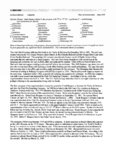
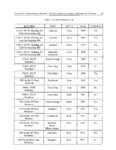
Show SAND AND GRAVEL: Private contractors, working on State Road Commission contracts, occasionally produce small amounts of paving gravel. There are no commercial operations. Biggest production in many years was 57,000 tons in 1965. SALT LAKE COUNTY Area: 756 square miles. Population: 1960 census, 383,035; 1965 estimate, 445,000. Active companies, 1965: mining, 95; primary mineral processing, 51. Average number workers, 1965: mining, 6,724; primary mineral processing, 4,153. Annual worker payroll, 1965: mining, $49,653,000; primary mineral processing, $29,010,000. Minerals history: Some minerals such as stone, clay, salt, sand and gravel have been used since colonization in 1847. Metals history really began in 1862, with arrival of General Connor and his California Volunteers at Fort Douglas, Most of these soldiers were prospectors, and they were soon scouring the hills for outcroppings. It was they who first panned gold in Bingham Canyon. The first Utah mining claim was staked in this canyon Sept. 17, 1863, by George P. Ogilvie, who came across an outcrop of galena while hauling logs. MineMllocations were made rapidly thereafter and underground mining of lead-silver ores began. However, it was not until the railroad reached Salt Lake City in 1870 that metal mining became a major industry. Gold, lead and silver became the principal products exported from Utah. The low-grade Bingham copper ore was largely ignored at first, until E. A_ Wall became interested and acquired several claims, increasing his holdings to about 200 acres by 1900. It remained, however, for a young metallurgist named Daniel C. Jaclding to effect the change from unprofitable underground mining of copper to profitable open pit operations. Backed by substantial capital, he acquired Wall's interests and organized the Utah Copper Co. (now a division of Kennecott Copper Corp.). A milling plant was soon developed and erected, and mass production methods of open pit mining introduced. From that humble beginning, the Utah copper pit has become the largest open pit copper mine in the United States, furnishing about 18 percent of the nation's output. The district continued to be a big producer of lead and silver. Numerous smelters were built in the 1880s and 1890s. Large custom smelters were con stru cted in the early 1900s, and Salt Lake became the world's largest nonferrous smelting center for lead, copper, gold and silver particularly. Soon after the Bingham discoveries in 1863, strikes were made in Big Cottonwood and Little Cottonwood canyon areas. Alta, with its famous Emma mine, became a roaring mining camp of 5,000 population. In 1870 the Hot Springs district was organized north of Salt Lake City. It produced small quantities of silver and iron, but was never extensively developed. Salt Lake County ranks first in Utah's mineral production, with gold, silver, copper, lead, zinc, and molybdenum being the major items. Organized Mining Districts Big Cottonwood-7 Lower Placer-56 Hot Springs (including Adams)-44 Smelter District-99 Little Cottonwood (Alta)-54 West Mountain (Bingham)-I11 62 1964 Minttral Production, 1964-65 : Quanlily Gold Silver Copper Lead Zinc Cemenl Clays Lime Molybdenum 5011 Sand and Gravel Slone oz oz Ions Ions Ions 378# bbls Ions Ions M Ibs Ions Ions Ions Tolals 1965 Quanlily Value Value 251,635 3,139,953 194,996 26,812 18,415 $8,807,225 4,059,959 127,137,359 7,024,809 5,008,744 379,042 3,8 68 ,5 95 255,945 21,605 13 ,323 $13,266,470 5,00'2,093 181,208,918 6,740,776 3,890,185 1. 1 1 1 4,625,000 4,841,000 1 1 4,139,000 52 ,293 4,400,000 64,749 $177,714,520 $242,641,518 (For explanations indicated by bracketed numbers in the above table, see page 24.) Salt Lake County's Metallic Mineral Deposits and Operations GOLD, SILVER, COPPER, LEAD and ZINC: Despite low prices for lead and zinc which closed some of the lead-zinc mines in Salt Lake County, the West Mountain (Bingham) district is still producing in large volume and Salt Lake leads all other counties in production of these important metals. The U.S. and Lark mine of the United States Smelting Refining & Mining Co. in the West Mountain district is responsible for approximately half of the lead-zinc ore tonnages in the state each year. This mine ranks third in lead production in the nation and is among the biggest-volume zinc producers. The Butterfield mine in the same district-owned and operated for many years by the Combined Metals Reduction Co. and until 1955 the second largest lead-zinc producer in the county-was sold to Kennecott Copper Corp.'s Utah Copper Division in 1955 and is now idle. Leasers have been making small shipments occasionally from other mines in the West Mountain district and from Big and Little Cottonwood. Since 1960 more than $1,200,000 worth of lead-zinc ore has been produced by Cardiff Industries and the Grand Deposit Mining Co. from the Alta district. There is still great potential in Big and Little Cottonwood districts. The only copper mine in Salt Lake County is Kennecott's Utah Copper pit at Bingham, largest producer in the country, furnishing about 18% of the nation 's output of raw copper. Although only about 14.5 pounds of copper are recovered from each ton of ore, 1965 production was 253,728 tons, valued at $181, 079, 000. Primary processing plants for nonferrous metals in Salt Lake County are the MIdvale flotation mill of U. S. S. R. & M. Co., which handles ores from the company's U.S. and Lark mine and also buys lead-zinc ores from mines in Utah and other western states; the Bonneville Concentrator, the Magna and Arthur Mills and the precipitation plant of Kennecott near Magna, and the copper smelter and electrolytic copper refinery operated by Kennecott at Garfield. U. S. S. R. & M. Co.'s lead smelter at Midvale was closed down in 1958 and later dismantled. Lead concentrates from the company's mill are processed at the International smelter near Tooele. Kennecott Copper Corp. is just completing a $100 million expansion program at its Utah Copper Division, which will increase copper production to 300,000 tons per year. 63 |