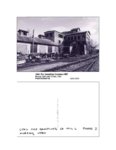
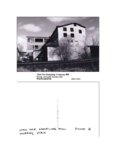
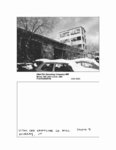
| OCR Text |
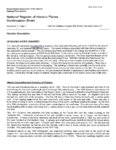
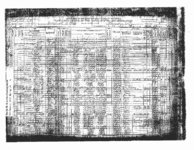
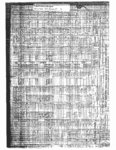
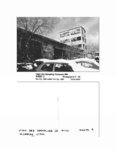
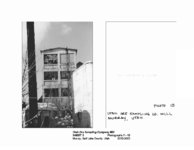
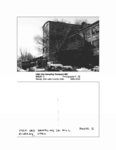
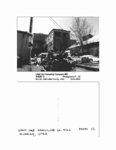
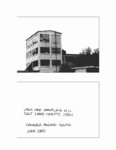
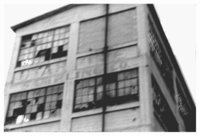
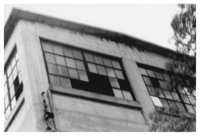
Show The New Industrial City (1897-1919) Now we have authority to establish a better form of govenzmeltt. We promised the people a better mode of gavenzment, better protection, better police force, better sanitation, sidewalks and electric lights. We stand here before you tonight and reaffirm those pledges. But we cannot carry them out without your aid and assistance and sympathy.) -Mayor C. L. Miller (1903) Murray's struggle to establish itself began as city residents and the smelter industry attempted to exert and expand their respective influence. ASARCO eliminated its smaller competition in the Salt Lake Valley and throughout Utah. ASARCO's Murray plant also sought to control local residents to gain economic and legal concessions. ASARCO was effective in obtaining cheap land for construction and gaining tax privileges from the newly formed local government. ASARCO's influence is further evident .as it was the only smelter in the Salt Lake Valley to escape unchanged, although $60,000 poorer, by the 1907 court decision that found the smelters responsible for the sulfuric acid and smoke damage to farmers' crops and livestock. 2 ASARCO even received city support during the strikes that rocked Murray in 1909 and 1912. Residents applied the same political means used to help ASARCO combat the negative effects of the massive corporation. City incorporation brought political and economic advantages to the residents and a means to control the unsavory elements of the industrial workers and their entertainment. The licensing and misdemeanor laws enacted during the period were clearly designed to eliminate outside competition with local merchants and to control the foreign workers. This culminated in anti-liquor and cigarette ordinances and the Revised Ordinances of Murray City in 1911.3 The "moral" element of Murray continued to triumph and restrict worker activities through the 1910s. The focal point of Murray's struggle for control occurred during these first two decades of the twentieth century. Mormon pioneer values dominated Murray until the town opened up to the expanding markets brought by the railroads and smelters during the 1870s. The small smelters gradually took control of the area as industrial workers replaced or integrated with the agricultural populace. 4 The 1880 census indicates that 39.8 percent of eligible workers held agricultural occupations and 29.1 percent were employed in local smelters. Occupations were reversed by the 1900 census, with 49.0 percent of the eligible workers employed by one of the two local smelters and only 25.7 percent in agriculture. The trend continued in 1910 with 11.4 percent agriculturalist and 42.6 percent smelter workers. Many of the agricultural workers also worked in the smelters, at least part time during the winter months.s Although Murray's small smelters were an irritant, smelter effects did not become untenable until 1902 when ASARCO brought in increasing numbers of foreign laborers to work in their massive lead pion!. The struggle for control between these two cultures is evident in the battle over incorporation, the formation and domination of the industry by ASARCO, the smelter smoke suit, the strikes and early union activities of the Western Federation of Miners, the concomitant rise of socialism and prohibition, and the backlash against unionism and labor following the First World War. These arc the individual stories that encompass the process of urbanization in Murray. Civic Life Murray's drive for incorporation began in 1897 and was led by the local newspaper editor, J. A. Willumson . He became incensed over the immoral entertainments and the established residents' lack of control over Murray's rowdy elements. He believed that incorporation was the only way to curtail the activities of those rowdies who had invaded the otherwise quiet community. The spark that ignited Willumson was a confrontation that occurred in early May of 1897. A "group of cowboys, fresh from shearing sheep, and smelter workers on payday"6 combined to thrust the town into a frenzy of riot and robbery. Several holdups occurred and the old brewery and dance hall were both burned to the ground . A committee was formed four weeks later to begin the incorporation process, although incorporation did not occur until late in 1902. Social unrest between the smelter workers and the farmer s during 1897 solidified two factions within the Murray area. 7 One faction, the representatives of "Progress," was led by editor 17 |