| OCR Text |
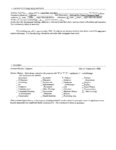
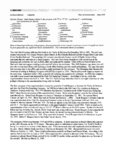
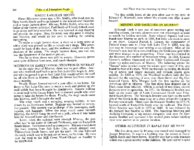
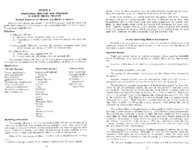
Show SECTION II plants. There is a lso a growing manufacturing industry producing structura l steel, iron and steel pipe, etc. , based on availability of iron and steel. OPERATIONAL PRACTICES AND PROCEDURE IN UTAH'S MlNING INDUSTRY General Comments on Minerals and Metals in Industry Minerals and metals are classed in several categories-each of which will justify brief comment to make its place more understandable in Utah's economy. The general categories are: Definitions I.-Metallic Minerals. A. Ferrous-those utilized for their iron content. B. Nonferrous-all metals other than those utilized for their iron content. II.-N onmetallic Minerals-includes all minerals excepting those from which metals are derived, or which are used as fuels . IlL-Mineral Fuels. A. Solid fuels-coal, lignite, peat, etc. B. Liquid fuels-oil , natural gas, natural gasoline, etc. The minerals listed under each of the above general categories in the 1966 Utah production statistics of the United States Bureau of Mines are as follows: Factors Controlling Mineral Development Minerals play an important role as a base for industrial development, and therefore citizens of Utah are highly favored in the variety and abundance of the state's mineral resources. Import·a nt Factors There are severa l factors in mineral economics which must be favorable before development of a mineral deposit is justified. Basic among these factors are: Location of the deposit in relation to transportation and marketing facili- Classification "Metallic Minerals" "Nonmetallic Minerals" "Mineral Fuels" Copper (nonferrous) Gold (nonferrous) Iron (ferrous) Lead (nonferrous) Molybdenum (nonferrous) Silver (nonferrous) Uranium (nonferrous)" Vanadium (nonferrous) Zinc (nonferrous) Asphalt and Related Carbons Gilsonite Carbon Dioxide (natural) Cement Clays Fluorspar Gypsum Gem Stones Lime Perlite Phosphate Rock Potash Pumice Salt Sand and Gravel Stone Sulphur Coal (solid fuel) Natural Gasoline (liquid fuel) Petroleum (liquid fuel) Natural Gas (liquid fuel) Marketing Some of the nonmetallics can be marketed throughout wide areas-potash, fluorspar and gilsonite being examples-but most of them are low in value, must be processed close to their source and face strong competition for markets with plants in other nearby states which are mining and processing the same minerals. Gypsum, cement, lime, etc., are examples. Sand and gravel and crush ed stone are examples of minerals which can generally be marketed only in local areas and, therefore, are seldom exported from the state for sale. Info~mation The metals, all except iron, are marketed freely over the nation because of their high or relatively high market value in relation to bulk. Most of them are processed in Utah to a refined or semi-refined state and then shipped to other areas. There is at present very little manufacturing of useful articles or consumer goods in Utah from the metals refined in Utah, ex cepting iron . Most of the iron mined in Utah is smelted and converted to steel in Utah 'Uranium, although a metal, is increasingly used as a fuel in power plants. 10 ties. Transportation facilities and cost. The market for the product, its location and the volume of its demand for the product. Nature's mineral deposits have no commercial value until the factors of transportation and markets become favorable for their development. The location of manufacturing plants is determined primarily by t h e availibility of the raw materials needed, the cost of transportation and the size of the markets. The locality in which they are to be placed is chosen after full consideration of these evaluable conditions. It is obvious, however, that mines can only be located where nature deposits the minerals and metals in the rocks of the earth's crust. The finding of a mineral deposit does not assure the development of a mine. There must be a market close enough to the deposit so that there is profit in mining the mineral products after paying the cost of transporting them to that market. The critical effect of transportation is illustrated in Utah's history by the fact that mineral deposits had been found in Utah's famous mining areas before the railroad was completed to Utah in 1869. However, there was little mining other than for silver and gold. The lead, copper and other metals cou ld not be profitably transported in wagon trains to eastern markets. Immediately after the railroad reached Salt Lake Valley in 1870, lead and silver mining became a major industry, and in 1872 Utah produced forty-five percent (45%) of all the lead mined in the United States. Iron mining in Utah serves as an excellent example of relationship of mineral developments to markets. Although the Iron County deposits were discovered in 1850, there was no commercia l development until 1922, when blast furnaces were built at Ironton to take advantage of a newly developed market on the West Coast. The mineral deposits have always been present in Utah but they have been 11 |