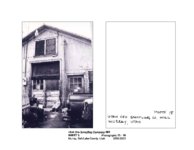
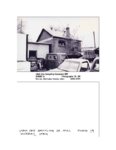
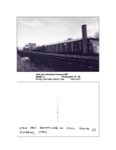
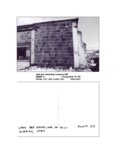
| OCR Text |
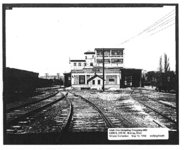
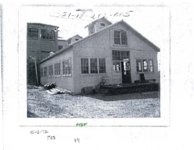
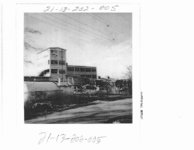
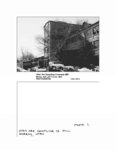
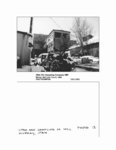
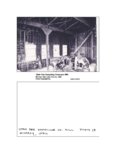
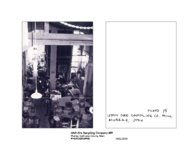
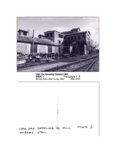
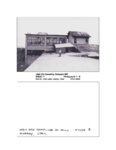
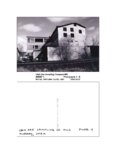
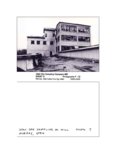
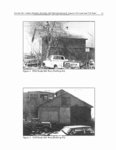
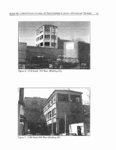
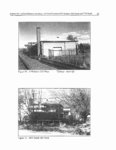
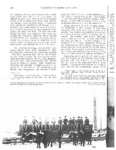
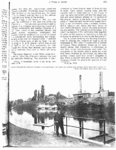
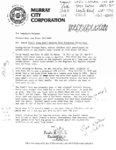
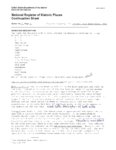
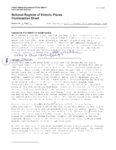
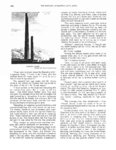
Show Tales of A Triumphant People And There Was The Founding Of Other Towns MAGIC LANTERN SHOWS About fifty-seven years ago, a Mr. Smith, who lived east on Sixty-fourth South used to go around to .t he scho!>ls and churches with a magic lantern show. His son, Robby Smith, who was the father of our former principal, Earl Smith of Libe~ty School, u~ed. to go along and help entertain.. H~ was talented m step d~nc~ng and playing the organ. May, his Sister, ~as also. good at smg~ng and dancing, and would do her part m making the everung enteresting. . To make a magic lantern show, a sheet or a large piece of white cloth was pinned up like a curtain on a stage. The actors would be back of the sheet, and the audience could see only the shadows of the actors. The magic lantern show, you can see, was the forerunner of the motion picture. . The fee to these shows was paid in money. However, prIces were quite different from now, and much cheaper. The first public home of the post office was in the store of Edward C. Warenski, near where the present post office is now located. MINING AND SMELTING IN MURRAY 288 METHODS OF EARLY COMMUNICATION IN MURRAY In the early days of Murray, there was no .post offic~. Anyone who received mail had to go to Salt Lake City to get It. Anyone who happened to go to Salt Lake City would collect the mail for all who lived in Murray. Often the letters had been enroute many months. . . Finally Henry Atwood started ~ post office m h~s home. He drove to Salt Lake City once or tWice a week and picked up the mail which had been brought by immigrants. Anyone wishing to send mail to his former home had to contact people who were going to take the letters for them. Finally, the stage coach came into Murray, and it brought the mail. The stage coach was a swinging, swayin& v~hicle. It was drawn by six handsome horses. Baggage was hmlted to twentyfive pounds. The captain was in charge of the passengers, maIl, express, and baggage. When t~e stage coach ca~e through Murray the driver hung the mall on a pole, where It was taken into the' Atwood home and distributed. Later when the railroad went through Murray, the post office was'in the home of Edward Fairbourn, east on Forty-fifth South Street. Fairbourn acted as postmaster. His son would meet the train coming from Salt Lake City, which stopped near Thirty-ninth South Street, and get the mail. He al~o delivered the mail, which was to be sent out of town, to the tram. He even took the mail to the Mill Creek Ward Chapel on Sunday to be distributed. 289 Although Utah is now one of America's great mining and smelting centers, the early pioneers were not encouraged to mine or search for hidden minerals. Some mineral deposits had been found near Murray as early as 1858, but little was -done to mine or use them. General Patrick E. Conner, the commander of Federal troops sent to Great Salt Lake City in 1862, was the first man to encourage local mining as an industry. Most of the General's men had been recruited from the California gold fields and were anxious to go prospecting. These searches resulted in the discovery of a number of important mines. In 1864, General Conner's soldiers discovered ore in Little Cottonwood Canyon about ten miles southeast of Murray. The following winter the "Emma" mine in what is now the winter sport resort of Alta, was found by four of his men. With the increase in mining, the building of newer and bigger smelting and refining plants grew rapidly. In 1869 or 1870, the Woodhull brothers built the first furnace for the smelting of ores, near State Street and Big Cottonwood Creek. Billy Morgan built the first smelter on the American Hill in Murray. The first silver bars shipped out of Utah came from Murray. Within a period of two years, sixteen furnaces were in operation. In 1871, the Germania Smelter was built on the south side of Little Cottonwood Creek near Fiftythird South Street. The Wasatch Smelter was built on the north side of the Creek in the same year, at a place where the Canning Factory now stands. Then came the Hanauer Smelter in 1872-73, located north of Forty-fifth South near the railroad. The Horn Silver Smelter was built in 1879 or 1880. It was followed by the Hyland Boy Smelter in 1886. The American Smelting and Refining Company, a big eastern company, took over the Germania Smelter and operated it for several years before building their new smelter at its present location. OTHER ACTIVITIES IN EARLY-DAY MURRAY The first drug store in Murray was owned and managed by Joseph Marriott. It was in a building near the corner of Fortyeighth South and State Street. Marriott also had a soda fountain which was a great novelty to the children. He later added a spice |